

In less than two years, Xiaomi Auto went from national sensation to facing intense public scrutiny. Its SU7 and YU7 electric vehicles delivered strong early sales, yet also triggered a wave of criticism over safety, marketing, and user rights.Reuters+1
For distributors and auto parts importers, this is more than a story about one brand. It is a textbook example of what happens when marketing promises run ahead of product maturity and service capability.
1. From “Dream Car” to Public Backlash
At launch, the Xiaomi SU7 was positioned as a high-value Tesla rival. Orders surged, and Xiaomi quickly became a visible new player in China’s EV market. But within months, several issues converged:
-
A fatal SU7 accident in March 2025 triggered questions about assisted driving safety and product robustness. Xiaomi had to publicly cooperate with police and share system data.Reuters
-
Regulators later announced software recalls and large over-the-air fixes for tens of thousands of SU7 vehicles to address intelligent driving risks.Reuters+1
-
A high-profile controversy exploded around the SU7 Ultra’s carbon-fiber hood. Owners claimed false advertising, arguing that the expensive hood did not deliver the performance benefits promoted in marketing. Hundreds of users demanded refunds.yicaiglobal.com+1
By May 2025, new SU7 orders reportedly dropped by more than 50% compared with peak periods, as safety concerns and dissatisfaction over marketing claims spread online.Reuters+1
The product itself still had strengths. Later data even showed solid satisfaction scores among many owners.CarNewsChina.com
Yet public opinion had already shifted. Once trust is shaken, positive signals arrive late.
Keyword: Xiaomi SU7 (Xiaomi SU7)
2. Rights Protection, Pre-Payment Clauses, and Delivery Friction
Beyond hardware and software issues, many users became frustrated with rights protection and delivery processes.
Reports described disputes over clauses that asked some buyers to settle the remaining balance before taking delivery. Some customers questioned whether such terms were fair, and at least one case went to court.36氪+1
In parallel, Xiaomi’s second model, the YU7, attracted headlines for extremely long waiting times. Media reported that many buyers only learned about 38–60 week delivery windows after paying non-refundable deposits, leading to complaints on consumer platforms and social media.Reuters+1
From a distance, one pattern is clear:
When contracts, delivery communication, and complaint handling are not transparent enough, every small product issue becomes a symbol of “broken trust”.
For an EV brand, this hits at the core promise: long-term reliability, continuous updates, and responsive after-sales support.
3. The Deeper Problem: Over-Marketing Versus Systematic Quality
None of these issues suggest that Xiaomi cannot build good cars. In fact, the company has strong engineering resources and is actively improving its products. But the recent storm exposes a structural gap:
-
Marketing promised a “dream EV” experience very quickly.
-
Product and quality systems were still in their first real-world iteration.
-
User expectation management did not fully match delivery risks.
Many tech companies entering the car business are tempted to copy smartphone playbooks. Short-cycle hype may work for phones. It is dangerous for vehicles, where safety, reliability, and after-sales support must stand the test of ten years or more.
For auto parts importers and distributors, the lesson is simple but hard:
Never let promotion run faster than your quality system and service capability.
4. What This Means for Auto Parts Importers and Repair Networks
You may not build complete vehicles. But you face the same trust equation with every workshop and every car owner you serve.
When a fleet operator or repair shop chooses you as a parts supplier, they do not only buy a product code. They buy:
-
The probability that the part will work as specified under real conditions.
-
The stability of quality over many batches and many years.
-
The responsiveness of your team when something goes wrong.
If a fuel filter, brake component, or engine gasket fails early, the driver does not blame the factory name on the box first. They blame the workshop and the supplier they can see and call. In that sense, every importer faces the same reputational exposure that Xiaomi faces with its cars.
5. Product Case: Fuel System Reliability for Ford Fleets
Few systems illustrate the link between invisible quality and visible trust better than the fuel system. Poor filtration can quietly damage injectors, high-pressure pumps, and emissions systems. Failures often appear months later, far away from the original purchase decision.
For fleets using Ford F-Series Super Duty trucks, this risk is even more serious. These vehicles often run heavy loads, long hours, and harsh fuel conditions.
-
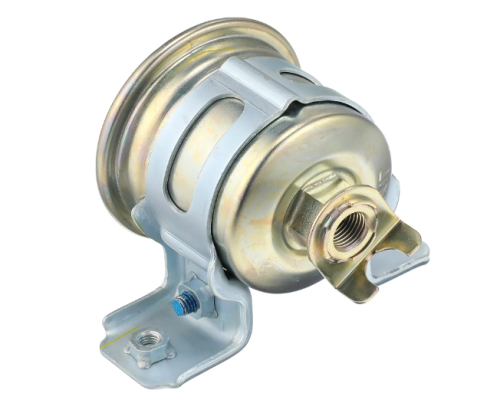
Fuel Filter BC3Z-9N184-B for Ford F450 Super Duty
Designed for high-duty cycles, stable filtration, and consistent flow to protect expensive diesel injection systems.
Product link:
https://bilinkglobal.com/product/fuel-filter-bc3z-9n184-b-ford-f450-super-duty/
Urban logistics fleets and shuttle operators rely heavily on the Ford Transit platform. Long idling, stop-and-go usage, and mixed fuel quality mean that fuel filter performance is critical to uptime.
-
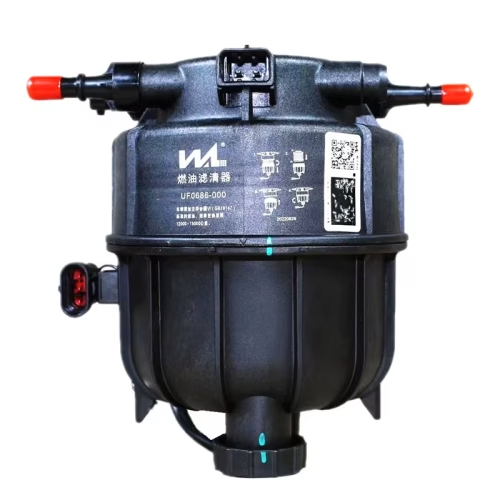
Fuel Filter CN3C159155BA for Ford Transit
Built to maintain clean fuel delivery under demanding commercial use, helping avoid unplanned downtime and workshop comebacks.
Product link:
https://bilinkglobal.com/product/fuel-filter-cn3c159155ba-ford-transit/
In both cases, a reliable fuel filter is not a “small” part. It is a frontline defence for the customer’s engine investment and for the workshop’s reputation.
Keyword: fuel filter (fuel filter)
6. A Practical Checklist for Importers Who Want to Avoid a Similar Reputation Crash
The Xiaomi case offers a useful mirror. Here are concrete actions that auto parts importers, distributors, and wholesalers can take now:
-
Audit your critical lines.
Identify parts whose failure would cause high visible damage: fuel system, braking, steering, safety-related electronics. -
Strengthen supplier qualification.
Do not rely only on price and catalogue data. Request test reports, quality certifications, and batch-to-batch consistency evidence. -
Align marketing language with verified performance.
Avoid exaggerated claims like “lifetime”, “zero failure”, or “race-level performance” unless you have test data and can sustain them in court. -
Build a clear complaint and claim process.
Make it easier, not harder, for workshops and dealers to raise issues. Fast, fair handling will protect long-term trust. -
Communicate limitations and maintenance needs honestly.
If a part needs specific installation procedures or service intervals, say it clearly. The best marketing line is a promise you can keep for ten years.
7. Conclusion: Reputation Is Built on Quiet Details, Not Loud Slogans
Xiaomi’s EV journey shows how quickly sentiment can shift when product issues, marketing gaps, and user-rights disputes collide. The company is still working hard to repair trust, update software, and adjust policies. That path will take time.Reuters+1
For auto parts importers and distributors, this storm is a useful reminder. Real brand strength does not come from the loudest launch event. It comes from consistent product quality, transparent service, and the thousands of quiet moments when a part simply works as promised.
Every fuel filter, every brake pad, every gasket you sell is a small “Xiaomi car moment” for your customer. The question is whether that moment builds trust or erodes it.

Related Post