Product Positioning
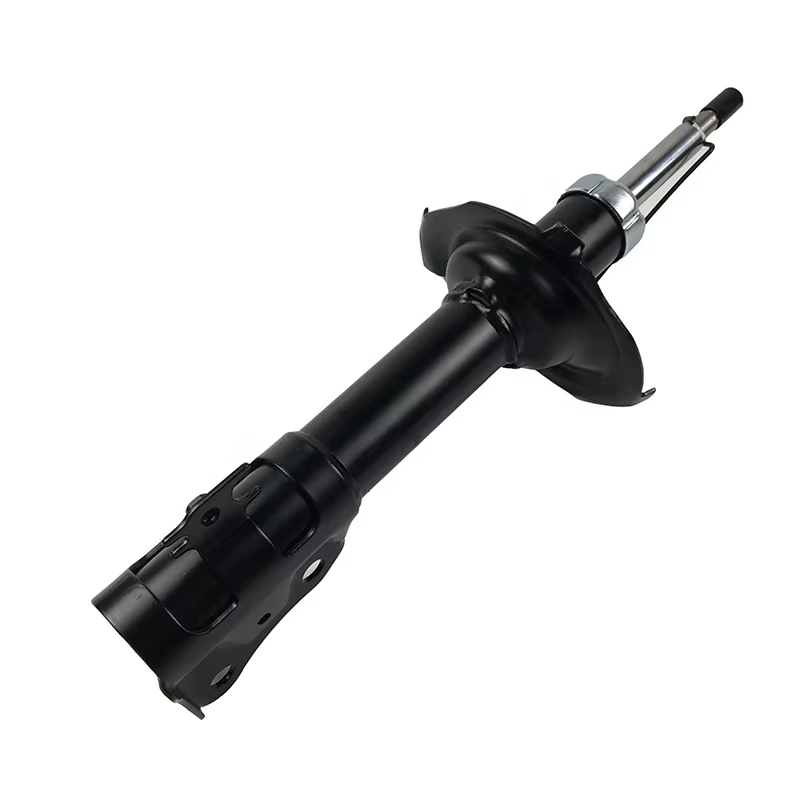
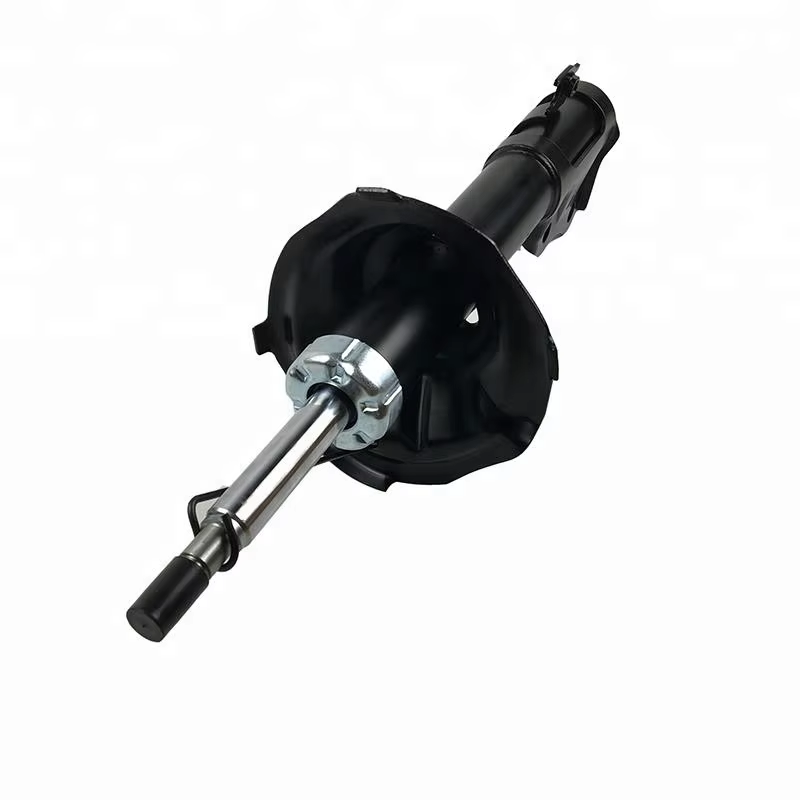
This front shock absorber is used as a chassis-related PMS component for importers validating ride control stability and application accuracy in the Kenya aftermarket.
Product Overview
This front shock absorber is designed for Toyota Probox vehicles equipped with a compatible front suspension system.
Its role is to control suspension movement by damping spring oscillation, supporting stable vehicle handling during normal operation.
In the Kenyan aftermarket, Probox vehicles are frequently operated under load and on uneven road surfaces.
Suspension components are therefore evaluated primarily for application correctness and consistency rather than comfort-oriented tuning.
Application Context
In Kenya, Toyota Probox vehicles are commonly imported as used JDM units and deployed in commercial, fleet, and mixed-use roles.
Typical operation includes frequent urban driving, variable loading, and exposure to uneven or deteriorated road conditions.
Under these conditions, suspension components experience continuous cyclic stress.
Workshops typically inspect shock absorbers when handling stability degrades or abnormal tire wear is observed.
This makes shock absorbers a wear-related chassis PMS component in real-world workshop practice.
Confirmed Application Scope
-
Vehicle Model: Toyota Probox
-
Installation Position: Front
-
Suspension Type: MacPherson strut (configuration-dependent)
-
Configuration Requirement: Matching front suspension specification
-
Market Context: Kenya / East Africa
Shock absorber applicability must be confirmed by suspension configuration rather than engine type alone.
OE Reference
Primary OE
This OE reference corresponds to specific Toyota Probox front suspension configurations commonly found in JDM-import vehicles.
Compatible OE References
Maintaining a single primary OE reference helps reduce configuration mismatch during early trial orders.
Production Range & Specification Stability
This shock absorber is manufactured under controlled specifications to maintain consistent mounting dimensions and stable damping characteristics.
Production control focuses on:
-
Dimensional accuracy of mounting points
-
Consistent piston rod finish
-
Stable damping response within designed operating range
These factors support predictable installation and suspension behavior across repeated service cycles.
Quality Consistency & Batch Control
Batch-to-batch consistency is monitored to ensure uniform fitment and damping behavior across multiple shipments.
This consistency is particularly important for chassis components subject to continuous dynamic load.
Stable batch performance allows importers to evaluate supplier reliability during PMS replenishment cycles.
Packaging & Labeling
Packaging is designed to support mixed PMS and chassis component shipments commonly used by Kenyan importers.
Clear OE reference labeling assists warehouses and workshops in distinguishing front and rear shock absorber variants.
Consistent packaging reduces handling errors during distribution and installation.
Procurement Considerations for Importers
When evaluating this front shock absorber, importers typically focus on:
-
Correct suspension configuration matching
-
Consistency across repeated supply batches
-
Workshop-level installation feedback
-
Packaging protection during transport
At this stage, application accuracy and supply stability are prioritized over ride comfort claims.
Typical Validation & Expansion Path
This front shock absorber is commonly evaluated after basic chassis maintenance items when importers assess suspension-related PMS coverage for Toyota Probox applications.
Following validation, evaluation may extend to rear shock absorbers or related suspension components within the same vehicle platform.
Risk Awareness
Toyota Probox suspension specifications vary by production period and market configuration.
Supplying shock absorbers without confirming installation position and suspension type can result in fitment issues and early validation failure.
Clear suspension configuration confirmation is essential before trial orders and repeat procurement.