


China’s ongoing price war among automakers has depressed domestic margins and forced manufacturers to look abroad. That outward push—coupled with China’s manufacturing speed and scale—has two simultaneous effects: it pressures incumbents in many markets, and it opens concrete opportunities for parts suppliers, distributors, and service providers who can move fast, offer cost-effective alternatives, and layer in reliability and services. This analysis synthesizes reporting and market studies to map where the real commercial openings are, and what actions companies like Bilink should prioritize. Reuters+1
1) What the sources say — the factual backbone
• China’s price war is prolonged and severe; domestic discounting has become a structural feature, not a short blip. Regulators are even stepping in to curb excessive discounting to avoid market collapse. Reuters+1
• Chinese OEMs have compressed development and manufacturing cycles, enabling rapid model refresh and lower unit costs; that manufacturing efficiency is a key reason they can export aggressively. Reuters
• Beijing’s policy shifts (five-year plans, export orientation) and reductions in subsidies are re-shaping flows—Chinese exports have flooded some overseas markets, yet policy tweaks may moderate volumes later. Reuters
• Emerging markets (Latin America, parts of Africa, Southeast Asia) are already showing accelerated EV uptake partly due to affordable Chinese models and incentives. That means demand volume—both vehicles and parts—is growing. Reuters+1
Those are the factual pillars. Below I draw deeper inferences from them and from supplier outlooks. S&P Global
2) How these shifts create real market opportunities (sector by sector)
A. Aftermarket & Replacement Parts — immediate volume opportunity
Why: When cheaper cars penetrate markets, total vehicle parc (installed base) of those brands grows rapidly. More vehicles = more routine maintenance, more wear-parts, more demand for affordable replacement components. This is a classic volume play: modest margin per part but large, recurring orders. Evidence: Chinese exports drive market share growth in South America and other regions—vehicle parc expands faster than incumbent forecasts. Reuters
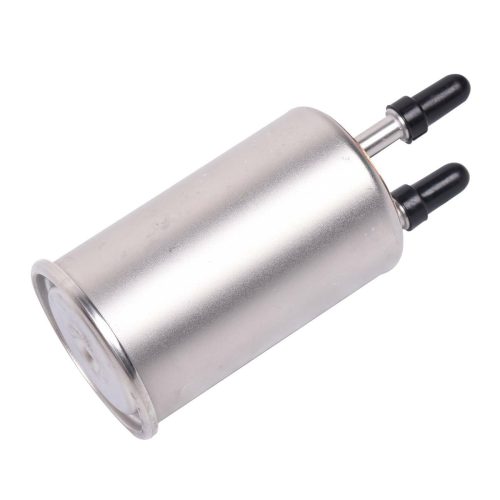
Opportunity for suppliers: Stock high-turn SKUs (filters, brake pads, suspension bushes, common sensors) tailored to leading Chinese models; offer certified kits that simplify ordering for independent workshops.
Inference (practical): Suppliers who pre-position inventory in regional hubs will capture a disproportionate share of recurring orders as Chinese-brand parc expands.
B. Value-Added Services — margin expansion through trust
Why: Price is the initial attractor, but service and trust retain customers. New Chinese-brand owners in poorer markets prefer low price—but sellers who back parts with warranty, quick delivery, technical support, and installation guidance win loyalty. Reports show Chinese brands are pairing competitive pricing with improving aftersales networks—suppliers can piggyback on that by offering bundled services. Reuters
Opportunity for suppliers: Offer extended warranties, training for local mechanics, fast-track replacements, and OEM-compatible service packages. These services command higher margins and build stickiness.
C. Local Assembly & CKD/ SKD Opportunities — capture value beyond parts shipping
Why: As Chinese OEMs expand overseas (and consider local production), there’s demand for CKD/SKD kits or semi-knockdown supply. Some automakers (and governments) prefer local assembly to skirt tariffs, create jobs, or meet localization rules. Reports show Chinese groups plan European footholds and other regional moves. Reuters+1
Opportunity for suppliers: Become preferred kit suppliers for regional assemblers (supply sub-assemblies, wiring looms, suspension modules). This moves margin from commodity parts to higher-value assemblies and recurring component supply contracts.
D. Price-sensitive aftermarket channels — private labels & bundles
Why: Distributors in many emerging markets compete primarily on price. They will prefer single-source, full-line suppliers who can deliver “one pallet, many SKUs” quickly. This trend favors suppliers who can supply broad catalogs and offer private-label packaging. Reuters and supplier analyses note the rush to source from China to defend margins. Reuters+1
Opportunity for suppliers: Offer private-label parts, set minimum-order tiers, provide flexible packing, and seasonal promotions tied to local buying cycles.
E. Financing & Trade Solutions — remove the purchase friction
Why: Price alone doesn’t solve buyers’ cash constraints. Many smaller distributors and workshops struggle with working capital. Suppliers that provide trade financing, consignment inventory, or deferred-payment terms enable faster adoption. Market studies on supplier resilience emphasize liquidity as a differentiator. S&P Global
Opportunity for suppliers: Partner with logistics and financial firms to offer B2B credit, insured consignments, or pay-on-delivery models.
3) Competitive risks — where the traps are
-
Margin squeeze at scale: Excessive focus on price alone invites competitors to replicate low margins; long-term survival needs diversification into services and higher-value SKUs. (Observed in China’s own industry struggles.) Reuters+1
-
Quality perception & regulatory barriers: Some markets (Europe) have stronger standards; low-cost parts must meet local regulations—certifications and traceability matter.
-
Geopolitics & trade shifts: Export flows can be altered by tariffs, national security reviews, or new local-production incentives—watch for policy signals. Reuters
4) Tactical playbook — actionable moves for Bilink (prioritized, with timelines)
Immediate (0–3 months)
-
SKU triage & hub stocking: Identify top 50 high-volume SKUs for Chinese models (filters, brakes, brake pads, common sensors). Move safety stock to one regional hub per major market (e.g., São Paulo for Latin America, Dubai for MENA, Lagos for West Africa). Rationale: capture first-mover volume. (Inference from export/market growth data.) Reuters
-
Featured bundled offers: Create “starter kits” for Chinese models (e.g., 6-month preventive kit). Market to independent workshops with promotional pricing.
Medium (3–9 months)
3. Service & warranty packages: Launch paid technical-support lines (multilingual), training webinars, and a certified-workshop program to build trust. Rationale: service differentiates beyond price. Reuters
-
Finance pilots: Partner with a regional fintech or logistics firm to trial consignment stock and 30–60 day credit to qualified dealers.
Strategic (9–24 months)
5. Local assembly/CKD play: Explore partnerships with regional assemblers for CKD kits where tariffs or regulations favor local value. Target 1–2 partnership pilots in Latin America or North Africa. Reuters
-
Quality & compliance roadmap: Invest in certification (EMC, safety, material traceability) for key product lines to unlock regulated markets (EU, GCC).
5) Evidence-backed conclusion (what the data implies)
-
Conclusion A (volume-first): Affordable Chinese cars are expanding parc rapidly in many emerging markets—this reliably creates recurring aftermarket demand. Suppliers who move early to regional inventory capture share. Reuters+1
-
Conclusion B (services-win): Price competition will compress margins; survival and outsized returns come from layering services, training, and financing on top of parts. S&P Global
-
Conclusion C (diversify channels): The opportunity is not purely export shipping—local assembly, private labels, and financial products are where higher margins and durable relationships form. 金融时报+1
(Above conclusions are inferences synthesized from the cited reports and articles.)
Bilink Auto Parts combines deep China supply-chain relationships with global distribution experience across Africa, Latin America, MENA and Southeast Asia. We offer inventory programs, technical support, and compliant components for leading Chinese models. Contact Bilink for region-specific sourcing plans, certified product lists, and partnership proposals — we help partners capture the China-driven aftermarket opportunity while managing quality and geopolitical risk.


Related Post
Data Illusion Series – Part 2: Low Price vs Low Risk in the Aftermarket Auto Parts Supplier Market
Data Illusion Series – Part 1: Sales Growth vs Inventory Health: Why High Volume Can Be Dangerous
Inventory Structural Dynamics: Why Stock Problems Are Rooted in Early Decisions, Not Operations
Inventory Signals Are Not Demand Signals: Why “Reasonable” Requests Create Unhealthy Stock