

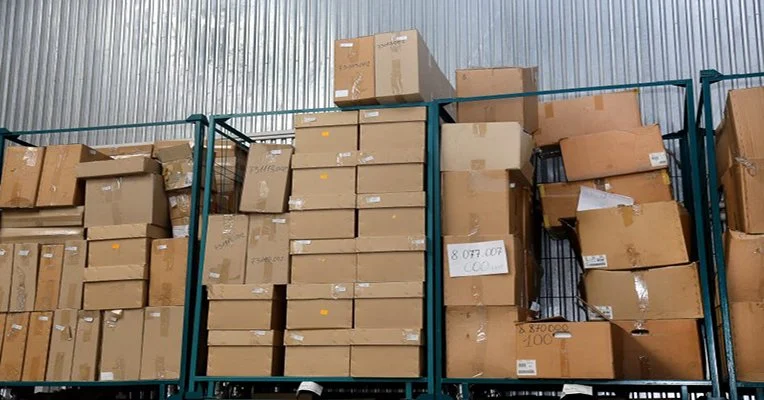
🚨 If You Think Inventory Is Just “Stock,” You’re Already Losing Money
Across the aftermarket, thousands of importers and wholesalers believe their biggest problem is slow sales.
They’re wrong.
Their biggest problem is inventory — specifically, the inventory they haven’t updated in years.
And here’s the painful truth:
Your profit isn’t disappearing because competition is strong.
Your profit is disappearing because your inventory is outdated.
Even worse, most suppliers don’t realize the damage until a financial review forces them to confront it.
Meanwhile, their stockroom becomes a silent profit-killer.
The situation is getting worse, not better.
This issue is best understood as a system-level failure rather than a cost or demand problem, as explained in
Most Auto Parts Problems Are Not Caused by Bad Suppliers — But by Bad Systems.
And unless you update your procurement structure now, the inventory crisis will follow you through 2026.
⚠️ 1. Dead Stock Is Becoming the Fastest-Growing Cost in the Aftermarket
Dead stock used to be a minor inconvenience.
Today, it’s a threat to business survival.
McKinsey’s supply-chain reports highlight that demand volatility is now the highest in 20 years, which means businesses that react slowly end up with distorted stock positions:
https://www.mckinsey.com
For auto-parts importers, this creates three hidden losses:
-
capital trapped in slow-moving SKUs
-
warehousing cost increases
-
product deterioration or obsolescence
A part that should move in 30 days now sits for 300 days.
And that difference destroys your cash flow.
Even worse?
Many importers continue to reorder the wrong SKUs because they still trust outdated demand patterns.
⚠️ 2. Your Inventory Structure Still Looks Like 2019 — but the Market Doesn’t
The aftermarket evolves faster than most businesses adjust.
Bain & Company’s retail model warns that companies with “static product assortments” lose market share even if their pricing is competitive:
https://www.bain.com
This is exactly what is happening in the parts industry:
-
new vehicle models every year
-
rising demand for Euro and turbo engines
-
shifts toward filtration and electronic components
-
growth of ride-hailing fleets with higher replacement frequencies
Yet many importers still stock:
-
outdated models
-
low-turnover SKUs
-
too many slow movers
-
not enough fast movers
-
almost no SKU refresh strategy
When your catalog doesn’t evolve, your customers evolve away from you.
⚠️ 3. The Real Killer: Your Procurement Rhythm Is Out of Sync With Market Reality
Modern aftermarket demand moves fast.
But many importers still buy like it’s 2015:
-
ordering “just to fill a container”
-
restocking when inventory “looks low”
-
purchasing based on suppliers’ pressure
-
buying according to old seasonal cycles
-
assuming workshops buy the same SKUs they bought five years ago
According to iMedia’s 2025 business consumption insights, buyers now shift suppliers 40% faster than before, driven mainly by product freshness and availability:
https://www.iimedia.cn
This means:
If your stock is outdated, your customer relationship is outdated too.
A workshop cannot wait.
A fleet cannot delay maintenance.
A wholesaler cannot bear long lead times.
When your inventory rhythm is wrong, your business loses relevance.
🔧 4. What Auto-Parts Businesses Must Do to Fix the Inventory Profit Leak
A. Refresh Your Product Array Every Quarter
Focus especially on:
-
fast-moving fuel filters, brake wear items, ignition components
-
new-model coverage
-
commercial vehicle fleets
-
high-frequency maintenance items
B. Build a Two-Tier Stock Strategy
Tier 1:Fast-movers → higher quantity
Tier 2:Slow-movers → minimal but essential coverage
C. Implement Realistic Demand Forecasts
Use updated lead-time assumptions and real consumption data from workshops.
D. Cut Dead Stock Aggressively
Anything that hasn’t moved in 120–180 days needs restructuring or liquidation.
E. Turn Your Warehouse Into a Profit Center, Not a Storage Room
Inventory should accelerate business, not suffocate it.
This article is part of Bilink Insights for Importers.
⭐ Today’s Recommended Product(Independent Section)
Fuel Filter 1567.87 for Peugeot 307
A stable-performance fuel filter designed for compact European platforms with high urban usage and sensitive fuel systems.
A reliable fast-moving SKU for workshops and wholesalers focusing on steady rotation.
🔗 https://bilinkglobal.com/product/fuel-filter-1567-87-peugeot-307/