

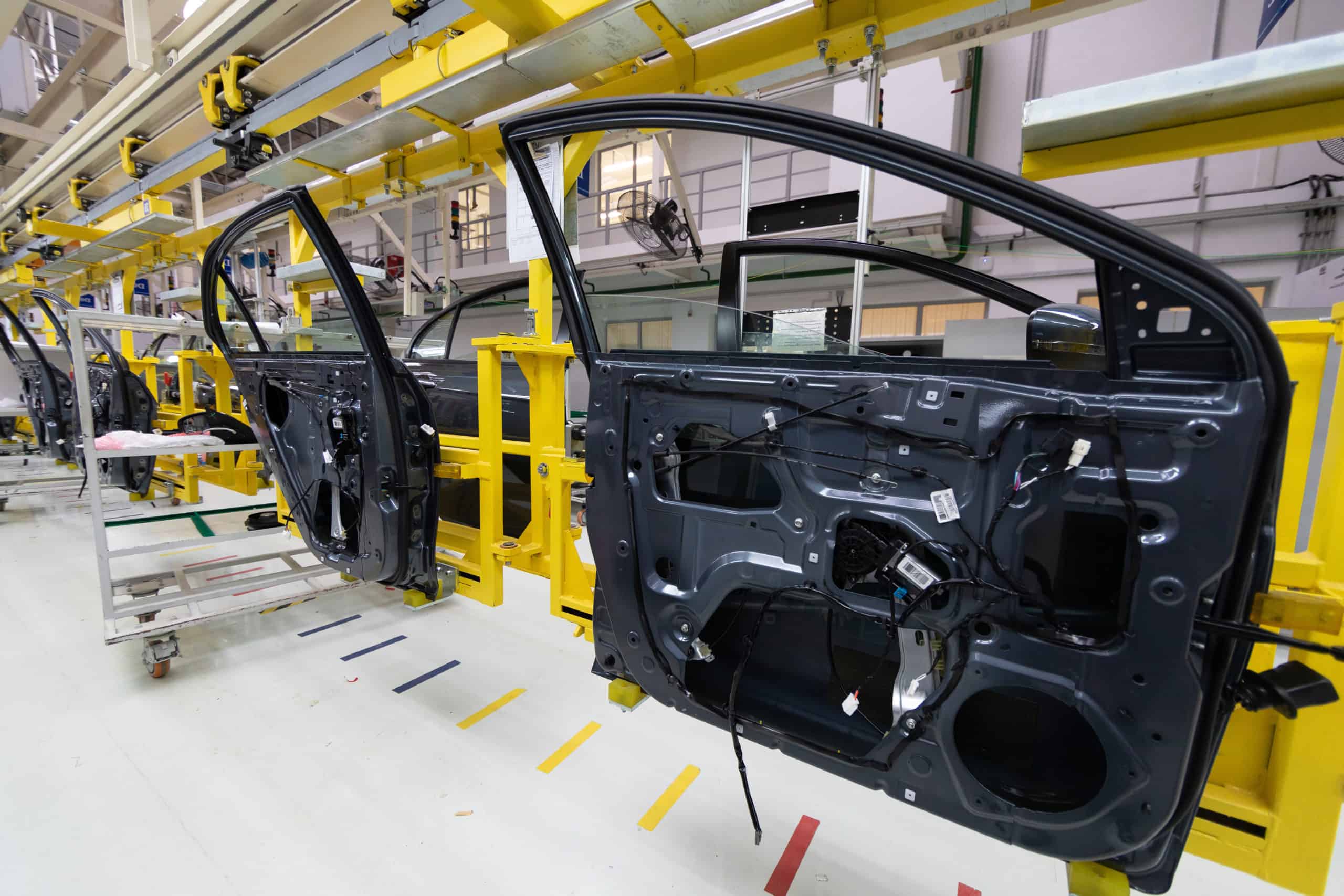
Over the past two years, many auto parts exporters have noticed a counter-intuitive trend:
Demand has not disappeared.
Customers still exist.
Yet factories are increasingly declining export orders.
Especially orders with these characteristics:
-
Multiple SKUs
-
Low quantity per SKU
-
Short lead-time expectations
-
High consistency requirements
At first glance, this looks like a simple attitude problem:
“Factories no longer care about small export orders.”
That conclusion is misleading.
What is happening after 2025 is not about willingness.
It is about structural incompatibility.
1. Factory Refusals Are Driven by Cost Structure, Not Attitude
Before 2020, many auto parts factories operated with labor-flexible cost models.
Small orders meant overtime, manual scheduling adjustments, and temporary inefficiencies — inconvenient, but manageable.
Since 2022, that logic has fundamentally changed.
-
Automation ratios increased
-
Production lines became standardized
-
Switching costs rose sharply
Multiple industry studies show that once automation is introduced, production line changeovers become disproportionately expensive.
According to analysis by McKinsey & Company, automated manufacturing environments typically experience 30–50% higher switching costs compared to labor-intensive setups.
In that context, multi-SKU small orders are no longer “less profitable.”
They become structurally irrational.
2. Small Orders Are Not Low-Margin — They Are High-Risk
This is where many traders misjudge factory decisions.
From a factory perspective, the real issue is not unit margin, but risk concentration:
-
Frequent material or tooling changes increase defect probability
-
Small batches expose quality issues more directly
-
Rework and dispute costs are higher per unit
The World Trade Organization has repeatedly noted that small-batch cross-border manufacturing carries disproportionately higher compliance and dispute costs compared to scale orders.
In simple terms:
Factories are not rejecting small orders because they earn less.
They reject them because one problem can wipe out the entire profit.
3. Factory Logic and Trade Logic Are Rapidly Diverging
This divergence is the most critical trend for 2025 and beyond.
Factories optimize for:
-
Stable production rhythm
-
Predictable capacity planning
-
Minimal changeover frequency
Importers and traders, however, face a different reality:
-
Fragmented customer demand
-
Higher market uncertainty
-
Growing reliance on trial orders and validation shipments
This is not a temporary mismatch.
According to global supply chain research from Boston Consulting Group, manufacturing systems are increasingly shifting toward fewer customers with deeper, long-term integration, rather than broad, flexible order acceptance.
The implication is clear:
Many factories are no longer structurally compatible with small export orders — regardless of price.
4. Which Auto Parts Categories Are Being Systematically Pushed Out?
Based on recent export feedback and dispute patterns, certain product types face higher rejection risk:
-
Parts requiring frequent specification changes
-
Components with low tolerance margins
-
Products with strict batch consistency requirements
By contrast, products with mature processes, stable specifications, and predictable replacement cycles remain more adaptable.
This explains why more importers now use specific validation parts to test supplier reliability before scaling cooperation.
The strategy is not conservative.
It is rational.
5. What This Means for Importers and Traders
The conclusion may be uncomfortable, but it is unavoidable:
-
Small orders are not disappearing
-
But who can accept them is being redefined
-
Factories are no longer the default solution
Applying 2019 sourcing logic to 2025 manufacturing reality leads to repeated failure.
The adjustment required is not negotiation technique.
It is supply-chain role judgment.
Final Observation
After 2025, the real challenge in auto parts exporting is no longer demand generation.
It is whether your supply system matches the structure of modern orders.
Those who fail to recognize this shift will assume the market is shrinking.
In reality,
the rules have already changed.
Related product:



Related Post
Data Illusion Series – Part 2: Low Price vs Low Risk in the Aftermarket Auto Parts Supplier Market
Data Illusion Series – Part 1: Sales Growth vs Inventory Health: Why High Volume Can Be Dangerous
Inventory Structural Dynamics: Why Stock Problems Are Rooted in Early Decisions, Not Operations
Inventory Signals Are Not Demand Signals: Why “Reasonable” Requests Create Unhealthy Stock