

Previously in the Data Illusion Series
At the beginning of this series, we examined how visible growth can hide structural weakness in inventory health.
Part 1 – Sales Growth vs Inventory Health
We then examined how visible price advantage can hide structural sourcing risk.
Part 2 – Low Price vs Low Risk
We also examined why larger scale does not automatically ensure supplier stability, and why faster shipment does not always indicate supply continuity.
Part 3 – Big Supplier vs Stable Supplier
Part 4 – Fast Delivery vs Supply Stability
This article examines yet another visible but often misread signal in the market of automotive aftermarket parts suppliers:
A wider product range does not automatically indicate deeper supply expertise.
Range is visible.
Control is structural.
In the aftermarket, structural control is what separates reliable partners from risky ones.
Why Wide Product Range Looks Strong for Automotive Aftermarket Parts Suppliers
For importers, a wide catalog has real commercial appeal.
A supplier covering filters, brake parts, cooling parts, engine management parts, suspension parts, lighting, and electrical items appears easier to work with. One conversation can cover more replenishment needs. One supplier can support more mixed-SKU orders. One account can reduce sourcing fragmentation.

That appeal is real.
In the automotive aftermarket, broad coverage can improve procurement convenience, speed up quotation cycles, and support container consolidation.
So this article is not arguing that fewer SKUs are always better.
That would be too simplistic.
The real issue is different:
When product range expands, does operational control expand with it?
In the Aftermarket, Breadth Is Easy to Display. Accuracy Is Not
This is where many buyers misread capability.
A long catalog can be assembled quickly.
A strong control system cannot.
In the aftermarket auto parts business, the real difficulty is not listing more SKUs. It is maintaining accuracy across those SKUs over time.
That includes:
-
OE cross-reference accuracy
-
fitment logic across models and years
-
packaging consistency by category
-
supplier-specific quality expectations
-
return-rate visibility
-
batch traceability
-
replacement data maintenance
A supplier can list thousands of parts and still lack control over the data behind them, especially when part of that width depends on aggregated trading networks rather than stable category-level sourcing control.
For importers, that creates a dangerous illusion.
The catalog looks wide.
The underlying system may still be shallow.
The Core Difference: Breadth vs Depth
Breadth means a supplier can offer more items.
Depth means the supplier understands, controls, and manages those items with repeatable discipline.
That includes:
-
category-level factory visibility
-
OE and application data maintenance
-
stable packaging rules
-
fitment judgment
-
common failure pattern awareness
-
realistic sourcing boundaries
-
batch-level consistency expectations
-
long-term return-rate tracking and corrective actions
This distinction matters.
A supplier with wide coverage but weak category depth may quote more products, but still create more confusion, more returns, and slower problem resolution.
A supplier’s expertise is only as deep as its control over the specific factory making the specific part.
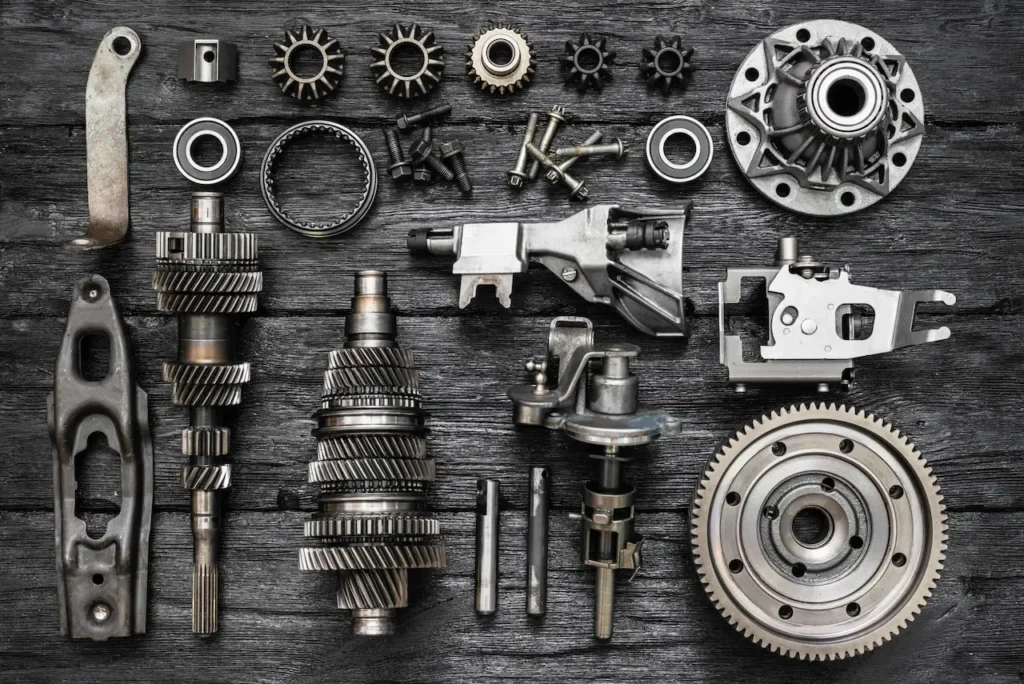
That is especially important in multi-category sourcing.
A supplier selling oil filters and headlamps is not managing the same risk structure. Filtration quality depends on media, valve design, and pressure logic. Lighting quality depends on mold accuracy, sealing, material stability, and optical consistency.
The catalog may combine them easily.
The control logic does not.
When Breadth Becomes a Real Strength
A broad product range can be a real strength when it is supported by structure.
That usually means:
-
core categories come from stable factory networks
-
OE cross-references are actively maintained
-
packaging logic remains consistent across product groups
-
fitment accuracy is reviewed, not assumed
-
the supplier transparently separates weaker categories from core strengths
-
quotation speed does not replace technical judgment
In that situation, range creates genuine importer value.
It improves procurement efficiency without diluting control.
That is the ideal version of breadth.
Not:
“We can sell everything.”
But:
“We cover many categories, and we know exactly how each category is sourced, controlled, and maintained.”
When Breadth Becomes a Risk
Breadth becomes risky when catalog growth moves faster than system discipline.
That usually appears in five ways.
1. Fitment Becomes Fragile
In the aftermarket, more SKUs mean more application decisions.
If OE cross-reference logic is weak, or if fitment maintenance is not updated consistently, the supplier may quote “available” parts that are technically wrong, partially matched, or risky in actual use.
In this market, wide coverage without fitment discipline creates operational noise.
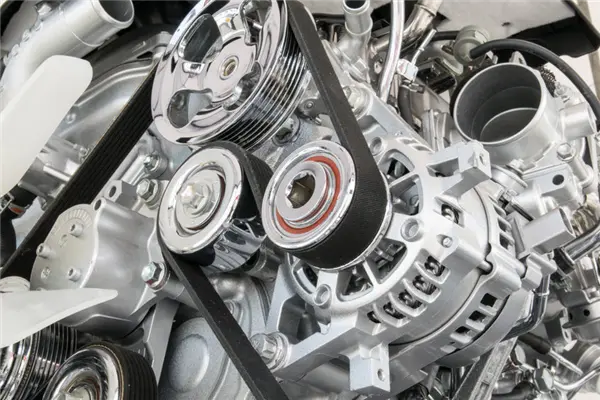
2. Batch Consistency Gets Diluted
When a supplier spreads attention across too many categories and too many sub-suppliers, monitoring consistency at part level becomes harder.
A broad catalog can dilute quality attention.
Over time, this often manifests as quality drift: the first batch and the tenth may no longer share the same source, material specs may vary, or packaging execution may shift — all without the catalog indicating any change.
The supplier still looks capable.
The batch behavior becomes less predictable.
3. Sub-Supplier Management Becomes Uneven
Many wide-range suppliers rely on distributed sourcing networks rather than category-specific control.
That is not automatically bad.
But it increases the burden of sub-supplier management.
Is this category sourced from a fixed, audited factory, or is it filled through opportunistic trading channels?
That is one of the most important questions an importer can ask.
A supplier may quote widely while controlling only part of what it sells.
4. Data Maintenance Cost Is Ignored
In the aftermarket, data is part of the product.
If a supplier manages tens of thousands of SKUs but does not actively maintain OE cross-reference records, fitment updates, return trends, and category-specific corrections, then much of that catalog is only numerical width.
It is not technical strength.
A wide catalog without disciplined data maintenance creates catalog volume, not sourcing depth.
5. Claims Become Slower to Resolve
When quality problems happen, shallow control becomes visible.
The supplier may struggle to determine whether the issue came from:
-
fitment mismatch
-
outdated OE cross-references
-
factory switching
-
material variation
-
labeling inconsistency
-
packaging deviation
Breadth creates options.
Depth resolves problems.
What Importers Should Actually Evaluate
Instead of asking:
How many products can this supplier offer?
Importers should ask:
-
Which categories are supported by fixed factories and stable audits?
-
How are OE cross-reference records updated?
-
How is fitment accuracy maintained across model years and applications?
-
Are packaging rules consistent across categories?
-
Which categories show the lowest return rate and the strongest claim response?
-
Can the supplier share recent category-specific return patterns or claim resolution timelines?
-
How frequently are OE cross-references and fitment records reviewed for high-volume categories?
-
Where is the supplier strongest, and where is it relying on secondary sourcing?
These questions reveal more than SKU count.
A supplier with fewer products is not automatically better.
A supplier with more products is not automatically more professional.
The real issue is whether category width is matched by factory visibility, data discipline, and category-level control.
Why the Illusion Persists
Because breadth is easy to display.
Catalogs are visual.
SKU counts are persuasive.
Wide range creates an immediate sense of capability.
Depth is harder to show.
It appears in:
-
OE cross-reference maintenance
-
fitment accuracy
-
batch consistency
-
sub-supplier discipline
-
packaging repeatability
-
claim resolution quality over time
Those are harder to present in a first quotation.
So importers often overvalue visible variety and underestimate invisible control.
This pattern is consistent with broader supply-chain thinking: resilience depends less on visible complexity and more on how that complexity is actually managed inside the operating system.
Building a Resilient Supply Chain
Just as growth can hide inventory imbalance, price can hide structural sourcing risk, scale can hide volatility, and speed can hide weak planning, a broad catalog can hide shallow category control.
Conclusion: The Fifth Data Illusion
In the world of automotive aftermarket parts suppliers, product range is visible. Supply expertise is structural.
A wider catalog can create real commercial value.
But breadth alone does not prove depth.
More SKUs do not automatically mean stronger category control.
The real question is not:
How many parts can this supplier quote?
It is:
How accurately and consistently can this supplier control the parts it offers?
That is the fifth data illusion.
Continue Reading the Data Illusion Series
Part 1 – Sales Growth vs Inventory Health
Part 2 – Low Price vs Low Risk
Related Insights for Further Evaluation
Data Illusion Series – Part 5: Wide Product Range vs Supply Expertise for Automotive Aftermarket Parts Suppliers
Data Illusion Series – Part 4: Fast Delivery vs Supply Stability in the Car Parts Supplier Market
Data Illusion Series – Part 3: Big Supplier vs Stable Supplier: Why Size Does Not Guarantee Stability in the Auto Parts Supplier Market