

Many importers assume another simple rule:
Faster delivery means a more reliable supplier.
In the global car parts supplier market, that assumption often sounds practical. A supplier who can ship faster appears more responsive, more organized, and more capable.
Speed is visible. Stability is structural.
Previously in the Data Illusion Series
At the beginning of this series, we examined how visible growth can hide structural weakness in inventory health.
Part 1 – Sales Growth vs Inventory Health
We then examined how visible price advantage can hide structural sourcing risk, and why larger scale does not automatically ensure supplier stability.
Part 2 – Low Price vs Low Risk
Part 3 – Big Supplier vs Stable Supplier
We also examined why broader catalog coverage does not automatically indicate deeper supply expertise, and why OEM language does not automatically indicate real manufacturing control.
Part 5 – Wide Product Range vs Supply Expertise
Part 6 – OEM Label vs Real Manufacturing Control
Now we address another structural misunderstanding:
A faster car parts supplier does not automatically provide a more stable supply system.
The Delivery Speed Trap in the Car Parts Supplier Market
When comparing suppliers, many buyers focus on lead time first.

Who can quote faster?
Who can confirm sooner?
Who can load earlier?
Who can ship this week?
These questions matter. However, they do not answer the deeper operational question.
Can the supplier deliver consistently over time?
In the aftermarket auto parts business, fast response can come from several different situations:
available stock
simplified inspection
schedule compression
temporary production priority
incomplete consolidation planning
Some of these support stable delivery. Some do not.
That is where the illusion begins.
Why Fast Delivery Does Not Always Mean Supply Stability
A fast shipment can look efficient. It can also hide structural weakness.
A supplier may ship quickly because the goods are already available. That is healthy.
But another auto parts supplier may also ship quickly because quality checks were compressed, packaging preparation was simplified, or other orders were delayed to free up capacity.
For the buyer, both situations look the same at first.
The container moves.
The documents are issued.
The order appears on schedule.
Yet the system behind the shipment may be unstable.
This is especially important when importers work with a china auto parts supplier across multiple SKUs. One urgent shipment may arrive on time, while the next order faces delay, variance, or incomplete readiness.
Fast delivery is a result.
Supply stability is a pattern.
Short Lead Time vs Repeatable Lead Time
This is the structural distinction many importers miss.
A short lead time describes one order.
A repeatable lead time describes a system.

In supplier evaluation, repeatability matters more than isolated speed.
A car parts supplier with a moderate but predictable cycle often creates less risk than a supplier who promises very fast delivery but cannot sustain the same performance across future orders.
Importers do not only buy one shipment.
They buy continuity.
That is why reliable planning often matters more than exceptional speed.
As broader supply chain risk frameworks note, resilience depends less on isolated performance events and more on whether the operating system can continue under pressure. Building a Resilient Supply Chain
Where Delivery Speed Can Become a Hidden Risk
Fast delivery can create hidden problems in four common areas.
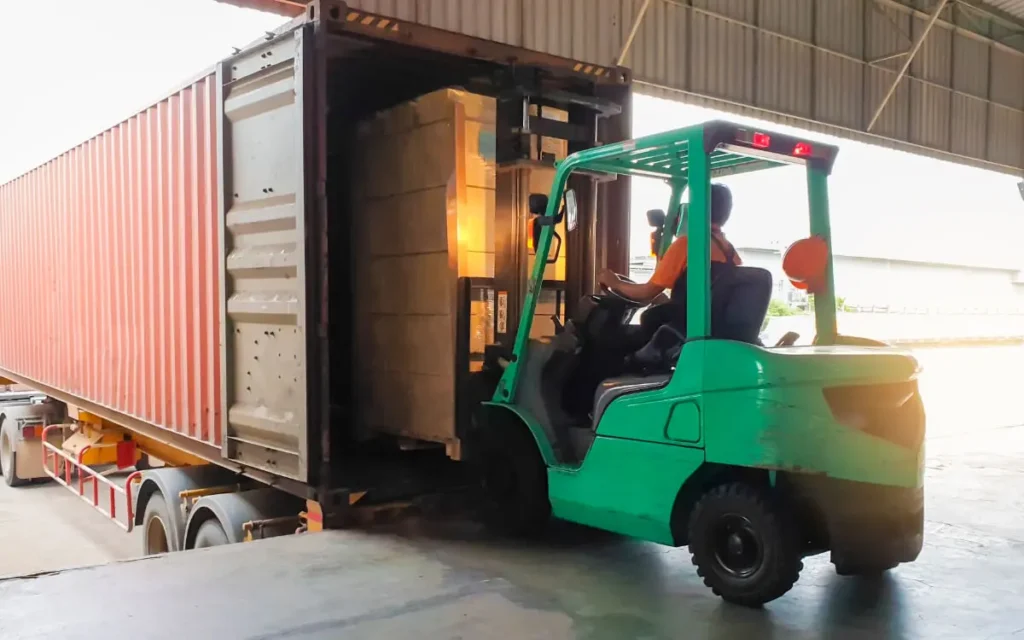
1. Compressed Inspection
If production finishes late but the shipment still leaves on time, inspection time may be reduced.
The buyer sees punctuality.
The risk appears later.
2. Packaging Inconsistency
A rush to meet shipment timing may weaken labeling control, carton consistency, or pallet preparation.
In the aftermarket auto parts trade, packaging error is not a small issue. It affects receiving efficiency, warehouse handling, and claim resolution.
3. Order Priority Distortion
A supplier may accelerate one order by delaying another.
That means the current shipment looks efficient, but the underlying schedule becomes unstable.
4. Incomplete Multi-SKU Coordination
A fast delivery promise is easier on a single-SKU order. It is much harder on mixed procurement.
For importers sourcing from a car parts supplier across many part numbers, delivery stability depends on coordination quality, not on one aggressive promise.
The Structural Question Importers Should Ask
Instead of asking:
“How fast can you ship?”
Importers should ask:
Is this lead time repeatable?
How often does the supplier meet the same cycle?
What happens when multiple SKUs are combined?
Is inspection still completed under urgent schedules?
Does faster delivery affect packaging and loading accuracy?
These questions reveal more than the promised date.
A stable car parts supplier is not defined by the shortest answer. It is defined by repeatable control.
Speed is useful.
Predictability is operationally safer.
Why the Illusion Persists
The illusion persists because fast delivery creates immediate psychological confidence.
Buyers feel progress quickly.
Sales teams like quick confirmations.
Procurement teams feel pressure to reduce waiting time.
In contrast, supply stability is harder to see. It is measured across repeated orders, not single transactions.
That makes speed more attractive than stability during early supplier comparison.
Just as growth can hide inventory imbalance, price can hide structural risk, and scale can hide volatility, delivery speed can hide weak operating discipline.
Conclusion: The Fourth Data Illusion
In the global car parts supplier market, speed is visible. Stability is structural.
A fast shipment does not automatically prove a stable supply system.
A short lead time does not guarantee repeatable delivery performance.
In the global car parts supplier market, repeatable delivery performance matters more than isolated shipment speed.
The critical question is not:
“How fast can this supplier ship today?”
It is:
“How consistently can this supplier deliver over time?”
That is the fourth data illusion.
Continue Reading the Data Illusion Series
Part 1 – Sales Growth vs Inventory Health
Part 2 – Low Price vs Low Risk
Part 3 – Big Supplier vs Stable Supplier
Part 5 – Wide Product Range vs Supply Expertise
Part 6 – OEM Label vs Real Manufacturing Control
For an enquiry about repeat supply, send the item references and order details, including quantity, required delivery window, reorder expectations and destination, so the timing assumptions can be reviewed with the parts list.