

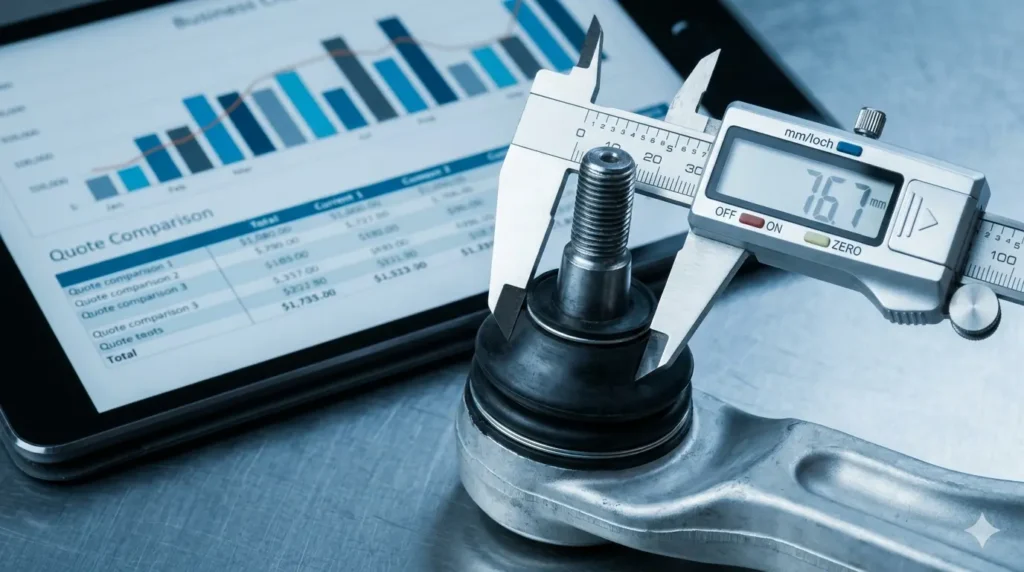
Procurement Signals #4: Low Price Is Not Control. It Is Often Deferred Risk.
When buyers compare auto parts wholesale suppliers, the lowest quote often looks like control. In Procurement Signals #1, we exposed the fast quote that dies at the warehouse. In Procurement Signals #2, we showed why technical curiosity is control, not delay. In Procurement Signals #3, we separated real control from procurement theater.
Continue in the Procurement Signals Series
Previously and next in this series:
Full series framework: Procurement Signals: What Buyers Should Check Before They Import Auto Parts.
Procurement Signals #1: The Sales Echo vs. Warehouse Reality.
Procurement Signals #2: Technical Curiosity Is Not Delay. It Is Control.
Procurement Signals #3: Not Every Question Is Control. Some Are Just Theater.
Procurement Signals #5: Car Parts by VIN Still Need Photo Confirmation.
Now we come to the next trap: the hypnosis of the lowest line.
When one supplier comes in clearly lower, many buyers feel they have found efficiency. Sometimes they have. However, very often, they have only found a quote that moved risk out of the spreadsheet and into the months after delivery.
Low price is not control.
It is often deferred risk.
In aftermarket trade, that deferred risk usually hides in three places: lower grade, looser product definition, or weaker product identity. The quote still looks comparable. The part name still looks familiar. That is why the trap works.
The answer is not to reject every low quote. The answer is to test the price gap before payment.
How Auto Parts Wholesale Suppliers Make LowQuotesBefore the Risk Appears
Many auto parts wholesale suppliers do not win by controlling the same product better. They win by quietly lowering the quotation basis.
The line still says control arm, mirror, lamp, grille, or suspension part. Yet the level underneath is different.
That difference usually appears in three ways.
Lower Grade
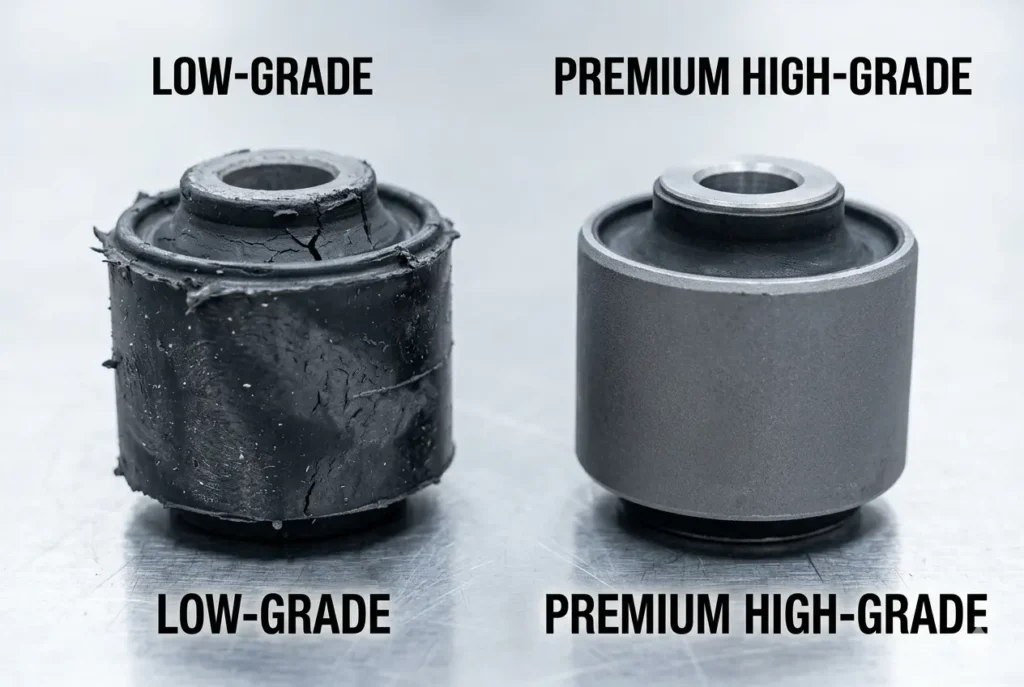
The quote looks cheaper because the product underneath it uses weaker material, looser consistency, or a shorter service life.
A control arm with lower-grade bushings may install without obvious problems. Then noise or early wear appears after the order has moved through the channel. A lamp may look acceptable in photos, but the batch finish may not stay consistent. A mirror may match the shape, while the fold stability, housing finish, or assembly feel stays below the expected level.
The dangerous part is not that the goods obviously look wrong. The dangerous part is that they look acceptable long enough for the order to move.
Looser Definition
Two suppliers can quote what looks like the same part, while the actual quotation basis differs.
One supplier may quote a normal aftermarket version. Another may quote a stronger matching-grade version. One may price the lowest workable interpretation. Another may quote closer to the buyer’s real downstream expectation.
So the buyer believes he is comparing one product across three suppliers. In reality, he may be comparing three supply levels hidden under one familiar product name.
This is where many quote comparisons become false before negotiation even starts.
Identity Drift
The quote also stays low when product identity stays vague.
A standard aftermarket part may be read as a supporting-brand product. A neutral package may be mentally upgraded into an OEM-style presentation. The supplier may never state this directly. He simply leaves enough room for the buyer to assume it.
Then the goods arrive.
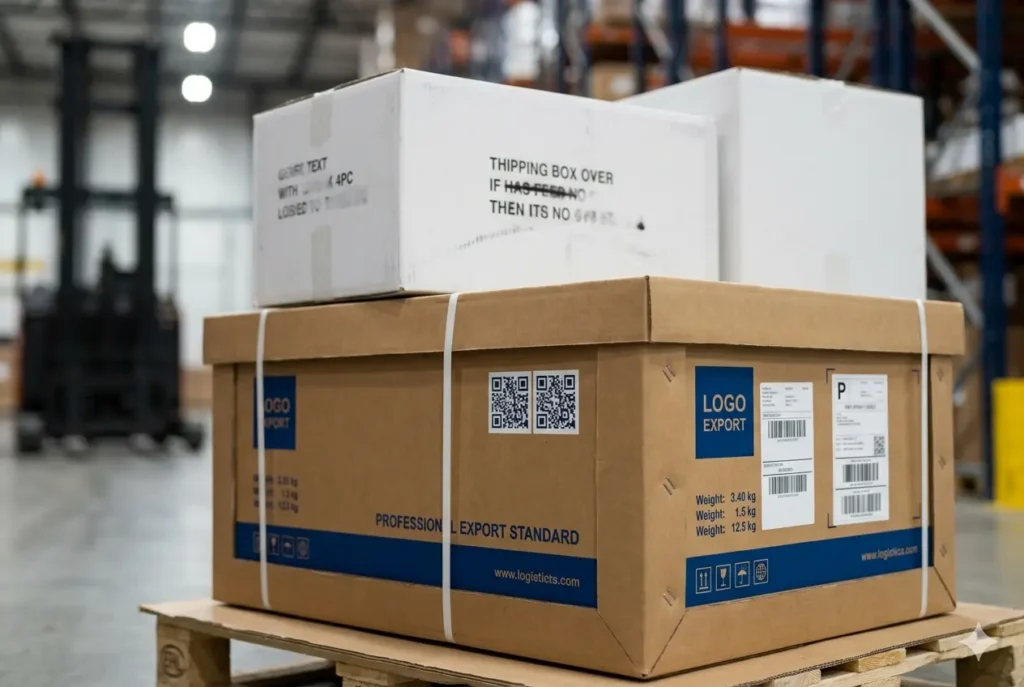
The part may still install. However, the packaging, label quality, print clarity, or carton presentation may not support the way the buyer planned to sell it.
That is not a cosmetic issue. In many markets, packaging is part of the product’s commercial identity. Weak labels, poor print quality, or generic packaging can make a shipment look refurbished, unofficial, or lower-grade before the part is even installed.
As a result, the buyer may lose more than product margin. He may lose resale confidence, channel position, and future reorder trust.
The Buyer’s Share of the Problem
Not every loose quotation is created by the supplier alone.
In real trade, many bad comparisons begin with a weak RFQ. If the buyer sends only an OE number, a product name, and the words “best price,” he has already created room for a cheaper interpretation.
If the RFQ does not define expected grade, packaging level, target market, or acceptance standard, the supplier may quote the lowest workable version in his system.
That does not excuse deliberate ambiguity. However, it explains why loose RFQs create loose quotations.
A loose RFQ gives every supplier a legal opening to quote a cheaper interpretation.
This is the buyer’s risk before the supplier’s price even appears. Therefore, before asking why one quote is far lower, the buyer should also ask whether the RFQ defined the requirement tightly enough.
Loose definition at RFQ stage almost always produces loose comparison at quotation stage.
This is why serious buyers should define requirements before comparing auto parts wholesale suppliers.
Healthy Low Price vs Dangerous Low Price for Auto Parts Wholesale Suppliers
Not every low quote is dangerous.
Some low prices come from real efficiency. A supplier may focus on a narrow category. A factory may have stable volume for several references. Packaging may be simple but transparent. Tooling costs may already be absorbed.
That is healthy low price.
Dangerous low price looks different. The number is attractive, but the quotation basis stays soft. The supplier says “same quality,” but cannot anchor the grade. The product looks comparable, but the identity remains vague.
Use this quick filter before approving the cheaper line.
Dimension | Healthy Low Price | Dangerous Low Price |
|---|---|---|
Source of advantage | The supplier explains the price clearly. The reason may be factory specialization, high volume, simple packaging, or stable sourcing. | The explanation stays vague. The answer is “good price,” “same quality,” or “trust me.” |
Grade verifiability | The supplier can support the grade with material declarations, test references, quality documents, or written grade positioning. | The supplier gives only verbal assurance. There is no material specification or test reference. |
Product definition | The quote states product version, grade level, packaging type, included items, and exclusions. | The quote uses only a part name and OE reference. The rest is left for the buyer to assume. |
Identity and packaging | Real packaging photos, label samples, and brand status match the downstream market requirement. | Identity is blurred. Catalog photos look fine, but real packaging and label quality remain unknown. |
After-sales boundary | Claim handling, replacement logic, and responsibility limits are stated in writing. | After-sales support is promised orally or written in one vague sentence. |
This table is the quick filter. If a low quote cannot anchor itself on the left side across most dimensions, the number alone is not a strength. It is an invitation to absorb risk the supplier chose not to price in.
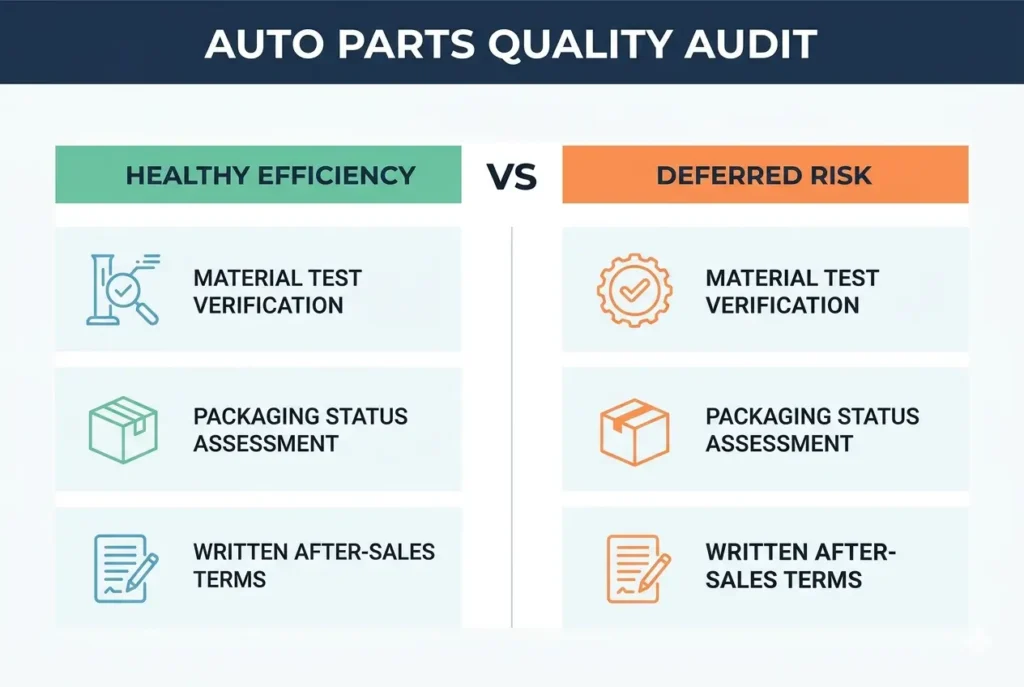
The Price Gap Test: Question Plus Evidence
When one quote is clearly lower, do not stop at questions. Move to questions plus evidence. Then verify the evidence itself.
For broader supplier evaluation discipline, buyers can also refer to the ISO 9001 quality management principles from ISO as a general reference: ISO 9001 Quality Management
1. Is This the Same Grade, or Just the Same Part Name?
Ask for something objective behind the answer:
- material declaration
- test reference
- factory quality document
- brand or grade positioning in writing
A simple “same quality” reply means very little. It may only mean the supplier wants the comparison to stay easy.
2. What Exactly Is the Quoted Product Definition?
Do not accept vague phrases alone.
Ask the supplier to write the quotation basis into the offer:
- grade level
- product version
- packaging type
- what is included
- what is excluded
If the definition stays soft, the price comparison stays false.
3. Is the Product Identity the Same as My Market Expects?
Ask for real packaging photos, real label photos, carton appearance, and branding confirmation.
Do not rely on catalog pictures or one attractive sample photo. Catalog images show marketing intention. Real photos show commercial reality.
This matters because the buyer is not only purchasing function. He is also purchasing market acceptance.
4. Will the Supplier Stand Behind This Offer if Claims Appear?
Ask what claim handling the supplier will support in writing:
- replacement logic
- response commitment
- quality responsibility boundary
- evidence required for claim review
A low quote with no after-sales confidence is not a strong quote. It is only a cheaper starting point for a later argument.
5. Why Is This Price Lower?
A serious supplier should explain the advantage clearly.
The reason may include factory specialization, simpler packaging standards, stable sourcing, narrower product scope, or concentrated production volume.
If the answer stays vague, the quote is probably vague too.
6. Can the Evidence Survive a Cross-Check?
Evidence itself can be staged.
Material reports can be reused. Packaging photos can show another batch. Certificates can be loosely worded. A testing statement may also sound stronger than it actually is.
So add a simple cross-check.
Ask for batch-specific documents. Request packaging photos with a handwritten date and buyer name in the frame. Compare any test report with the actual quoted specification. If possible, arrange random inspection before shipment.
A supplier who is clear on product reality rarely fights these requests. A supplier who resists them is sending another signal.
For buyers comparing aftermarket car parts wholesale offers, this matters more than another round of discount pressure.
Why the Money Comes Back Later
Many buyers accept the quote first and pay for the unclear interpretation later.
The real cost of a low quote seldom stays in the price column. It moves downstream.
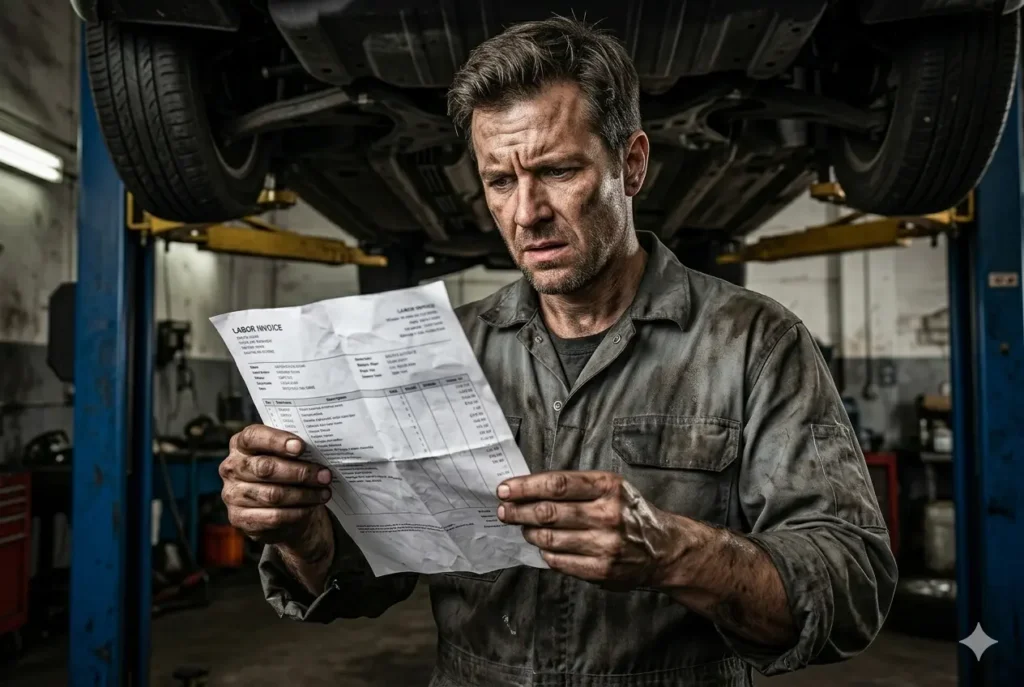
A lower-grade control arm does not only risk one replacement part. In many markets, the labor claim can exceed the value of the part itself. The buyer may save a small amount on the part, then lose the full margin when removal, reinstallation, and claim handling begin.
A weak lamp batch does not only create a product complaint. It can cause retailers or workshops to reject the shipment if finish consistency or presentation falls below the expected sales level.
A blurred product identity does not only create an awkward explanation. It can weaken the importer’s position in the local channel.
A workshop that loses confidence in one noisy control arm may not only reject that SKU. It may stop buying from the importer across several lines.
That is why the real cost is not one claim. It is the future reorder value of a channel relationship.
This is how low price returns later as:
- after-sales handling
- labor exposure
- replacement pressure
- trust erosion
- lower reorder probability
The risk is not only technical. It is commercial. And commercial damage usually lasts longer than the original price advantage.
What Strong Buyers Compare in Auto Parts Wholesale Suppliers
Strong buyers do not compare numbers first.
They compare grade, definition, product identity, after-sales exposure, and proof behind the supplier’s claims. That is the better filter when screening wholesale automotive parts suppliers.
A stronger quote may not be the cheapest one. However, it will usually be clearer about what is being sold, what level it belongs to, and how much risk the buyer must absorb.
That clarity is not extra. It is part of the value.
This is especially important for importers, distributors, and aftermarket auto parts wholesale distributor buyers who sell into repair channels. Their customer does not judge only the landed cost. The customer also judges fitment accuracy, packaging trust, label clarity, complaint response, and repeat stability.
The Bilink Auto Parts View
At Bilink Auto Parts, we do not treat low price as proof of control.
We test it first.
Lower than what grade?
Lower under what product definition?
Lower with what packaging identity?
Lower with what after-sales boundary?
When we compare auto parts wholesale suppliers, we do not only compare the first sheet. We compare how much product reality is actually carried inside the quote.
That is why we prefer a harder conversation before payment to a harder dispute after delivery.
A quote is only useful when it carries product reality, not just a number.
Conclusion
Low price is not control.
Very often, it is a weaker grade, a softer definition, or a blurred product identity packaged as savings.
That does not mean every low quote is dangerous. Some low prices come from real efficiency. But a low price only deserves trust after the supplier proves the grade, defines the product clearly, and supports the identity your market actually needs.
Strong buyers do not compare numbers alone. They compare evidence. They compare after-sales exposure. They compare whether the cheaper quote is attached to the same product reality.
Because in auto parts trade, the cheapest line is often where the next claim is already hiding.