

In the global auto parts supplier market, larger scale is often mistaken for greater stability. Many importers assume that choosing a big auto parts supplier automatically reduces operational uncertainty. In reality, factory size does not always reflect structural consistency.
Scale is visible. Stability is structural.
Previously in the Data Illusion Series
At the beginning of this series, we examined how visible growth can hide structural weakness in inventory health.
Part 1 – Sales Growth vs Inventory Health
We then examined how visible price advantage can hide structural sourcing risk.
Part 2 – Low Price vs Low Risk
We also examined why faster shipment does not automatically indicate supply continuity, why broader catalog coverage does not automatically indicate deeper supply expertise, and why OEM language does not automatically indicate real manufacturing control.
Part 4 – Fast Delivery vs Supply Stability
Part 5 – Wide Product Range vs Supply Expertise
Part 6 – OEM Label vs Real Manufacturing Control
Now we address the third structural misconception:
A large auto parts supplier is not necessarily a stable one.
The Scale Illusion in the Auto Parts Supplier Market
When evaluating a potential china auto parts supplier, importers often look at:
Factory size
Number of employees
Number of export markets
Production capacity
Annual export volume
These are scale indicators.
However, scale indicators measure capacity.
They do not measure operational stability.
A large global auto parts supplier may handle hundreds of SKUs and multiple markets simultaneously. Operational complexity increases with scale.
Complexity does not always improve consistency.
Why Large Auto Parts Suppliers Can Experience Structural Volatility
Scale introduces structural challenges.
1. Frequent Production Line Switching
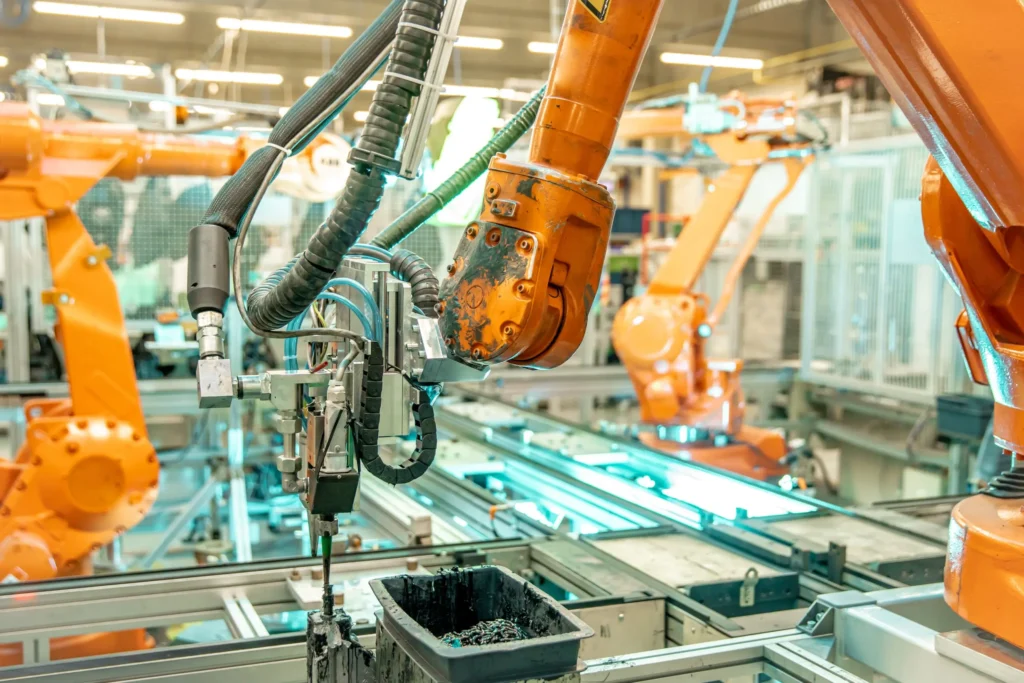
Large suppliers often manage multiple vehicle platforms and product categories.
Production lines may switch between models or specifications frequently. Each switch increases the probability of variance.
In the auto parts supplier environment, batch consistency depends on process control, not on factory size.
2. Order Priority Reallocation
Large suppliers typically serve clients of different volumes.
When a high-volume buyer places an urgent order, production scheduling may shift. Smaller orders can be delayed or rescheduled.
For importers sourcing from a large auto parts supplier, delivery predictability may fluctuate based on priority shifts.
Scale creates negotiation leverage for some clients and scheduling uncertainty for others.
3. Raw Material Substitution Risk
In periods of heavy production load, material sourcing adjustments may occur.
Alternate suppliers.
Temporary substitutions.
Lot variations.
Without strict traceability systems, these changes increase structural risk.
Stability requires system discipline, not capacity expansion.
4. Multi-Market Standard Mixing
Large suppliers exporting to different regions must comply with multiple regulatory and packaging standards.
Variation in labeling, specifications, or packaging configuration can increase operational complexity.
As explained in supply chain risk frameworks by the Harvard Business Review (https://hbr.org/2011/01/managing-risks-a-new-framework), complexity in global operations increases exposure to variability.
In the auto parts supplier sector, higher complexity may reduce predictability if not controlled by strong internal systems.
Stability Is a System, Not a Scale Metric
Importers often ask:
How large is the factory?
How many countries do you export to?
These questions evaluate size.
More structural questions include:
Is production batch-tracked?
Are production lines fixed or frequently adjusted?
Is there material traceability documentation?
Is quality control standardized across product categories?
Are packaging specifications repeatable across shipments?
A truly stable auto parts supplier demonstrates process repeatability, not just production capacity.
Capacity shows how much can be produced.
Stability shows how consistently it can be produced.
Why the Scale Illusion Persists
The illusion persists because scale is easy to observe.
Factory visits emphasize equipment and facility size.
Trade shows highlight export numbers and geographic reach.
Corporate presentations focus on capacity growth.
Stability, however, is embedded in internal systems.
It is less visible.
It requires deeper evaluation.
Just as sales growth can hide inventory imbalance, and low price can hide structural sourcing risk, large scale can hide operational volatility.
The Structural Question Importers Should Ask
Instead of asking:
“Is this the biggest auto parts supplier available?”
Importers should ask:
“Is this a stable parts supplier with predictable production behavior?”
In the global parts supplier market, scale expands output potential. Stability protects operational continuity.
Size is a metric.
Stability is a system.
Conclusion: The Third Data Illusion
In the global auto parts supplier ecosystem:
Growth can mislead.
Price can mislead.
Scale can mislead.
Large suppliers are not automatically unstable.
But size alone does not guarantee structural consistency.
In the global auto parts supplier ecosystem, structural stability determines long-term sourcing reliability more than scale metrics.
The real question is not:
“How big is the supplier?”
It is:
“How controlled is the system behind that scale?”
That is the third data illusion.
Continue Reading the Data Illusion Series
Part 1 – Sales Growth vs Inventory Health
Part 2 – Low Price vs Low Risk
Part 4 – Fast Delivery vs Supply Stability