

Request a quote for this part
Send the product link or part reference, vehicle/VIN details and quantity for review.
This starter motor fits Toyota Hilux models with the 2.7L petrol engine (2TR-FE).
It supports reliable engine cranking during startup.
The aluminum housing and steel drive end ensure durability.
OE reference 28100-0K010 matches standard 2TR-FE applications.
Engine verification is recommended before installation.
Overview
The Toyota Hilux 2.7L starter motor initiates engine rotation during startup.
For this reason, Toyota specifies precise mounting geometry and electrical interfaces.
The starter delivers consistent cranking performance under varied temperature conditions.
As a result, engine starting remains reliable in daily operation.
Vehicle Compatibility and Application Scope
This starter motor is designed for Toyota Hilux models equipped with the 2.7L petrol engine.
Typical applications include vehicles using the 2TR-FE engine platform.
The same starter layout appears across several Toyota petrol utility vehicles.
Moreover, installation points remain consistent across common production years.
Construction and External Design
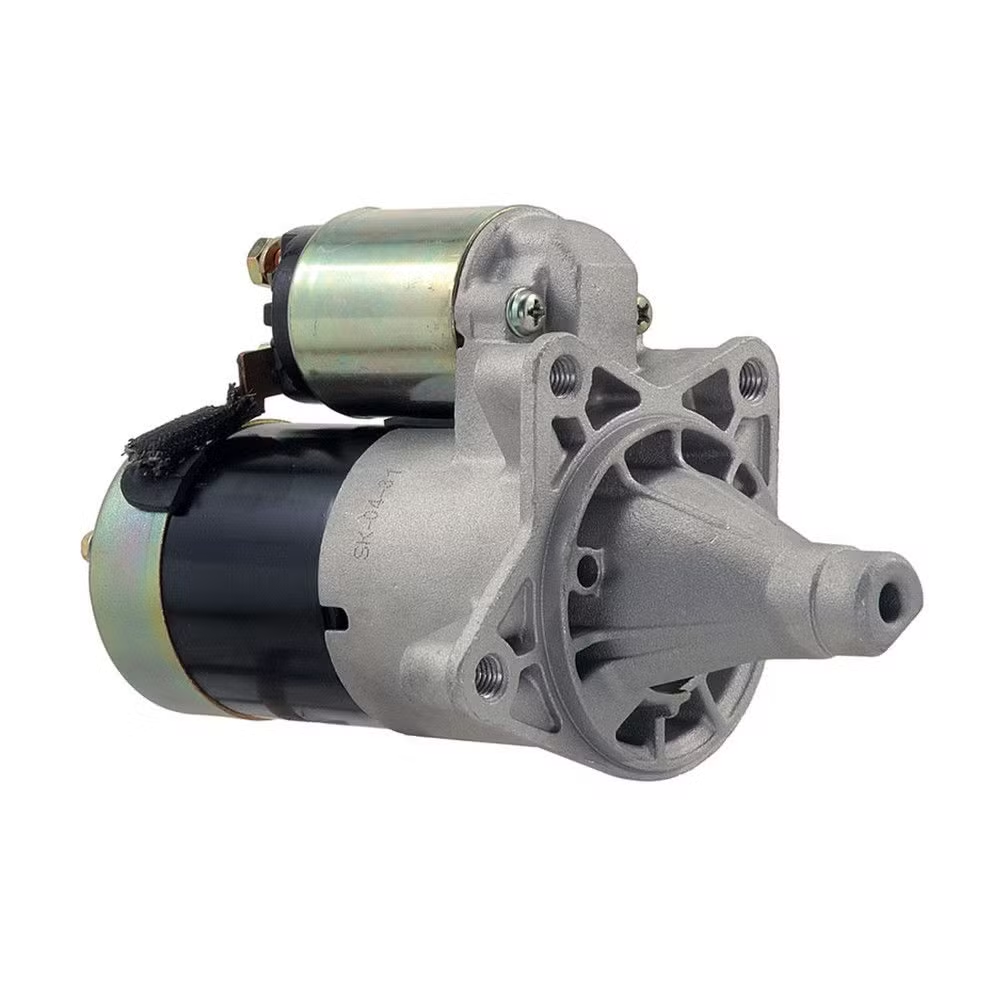
The starter motor features an aluminum alloy housing with a compact cylindrical profile.
Therefore, the exterior supports heat dissipation and weight reduction.
A steel drive-end nose and integrated mounting flange are visible for secure attachment.
At the same time, the solenoid housing is externally mounted for electrical connection.
Starting Stability and System Integration
Starter motors operate under high current load during engagement.
For this reason, the assembly supports stable engagement with the flywheel ring gear.
As a result, cranking performance remains consistent during repeated start cycles.
Proper alignment helps reduce abnormal noise during operation.
OE Reference Integration
Toyota assigns OE number 28100-0K010 to this starter motor specification.
This OE corresponds to the standard starter configuration used on 2TR-FE engines.
Equivalent references may exist depending on production updates.
Therefore, vehicle verification is recommended before replacement.
Service and Replacement Considerations
Starter motors are serviceable electrical components.
For this reason, replacement is recommended when slow cranking or engagement issues appear.
Electrical connections and mounting bolts should be inspected during service.
Installation Notes
This starter motor installs directly onto the engine block.
No modification to surrounding components is required.
Correct torque and electrical connection are essential during installation.
Send a parts inquiry
Include the product link or part reference, vehicle/VIN details and quantity. Add photos and any packaging or documentation requirements so the request can be reviewed before quotation.
Reliable Quality Assurance
One-Stop Parts Sourcing
Fast Professional Support
Competitive Global Pricing