


Surging Imports of Combustion Cars Drive Demand for Maintenace Parts
As the world accelerates toward electrification, paradoxically 2025 sees a renewed export surge of gasoline vehicles from major Asian producers to emerging markets. A recent Reuters investigation shows Chinese automakers are redirecting excess gasoline-vehicle production to Latin America, Africa and Southeast Asia, as domestic demand for EVs skyrockets at home. Reuters
This export boom fuels demand from importers who purchase used or new combustion cars abroad — and such cars require regular maintenance. That makes engine components like air filters and oil filters critical for downstream dealers and workshops.
Two filters illustrate this trend well:
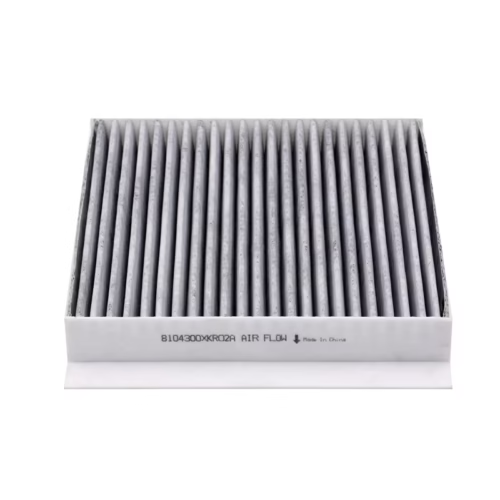
Air Filter for 2012 Honda Civic 1.5T — https://bilinkglobal.com/product/17220-r1a-a01-air-filter-for-2012-honda-civic-1-5t-honda/
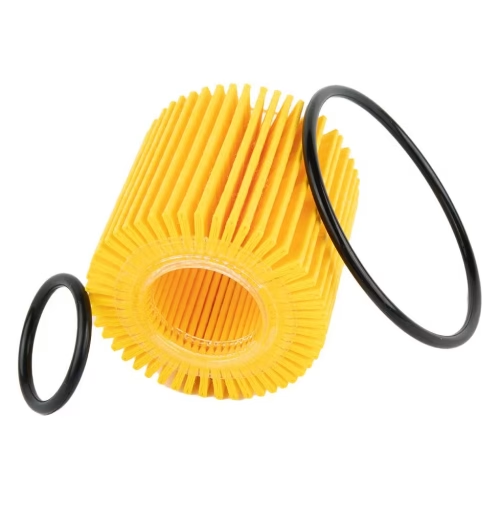
Oil Filter for Toyota Yaris / Corolla — https://bilinkglobal.com/product/90915-yzzn2-oil-filter-for-corolla-toyota/
As more combustion cars flow to global second-hand and emerging markets, demand for such fast-moving parts rises sharply.
Supply-Chain Pressure and Global Export Controls Push Dealers to Stock Essentials in Advance
Global supply chains remain fragile in late 2025. Export controls — especially those targeting rare earths and critical minerals — continue to affect parts manufacturing and logistics worldwide. Reuters+1
Although filters themselves do not rely on rare earths, the ripple effects on supply-chain scheduling, freight capacity and component availability affect all automotive components. For importers and dealers, this means unpredictable lead times and rising cost pressures.
To mitigate risks, many distributors adopt a pre-stock / buffer inventory strategy — especially for high-turnover parts such as air filters and oil filters. That minimizes delays and ensures steady service capacity for clients, which builds reliability and reputation.
Used-Car Market Growth and Cost-Conscious Buyers Fuel Long-Term Parts Demand
According to an industry forecast by Roland Berger, the global auto-parts sector is entering a “stagnation-to-transformation” phase in 2025, marked by slowing new-car sales and rising importance of aftermarket and maintenance parts. Roland Berger
As many consumers — especially in emerging economies — shift to used or affordable combustion vehicles, the demand for maintenance parts (filters, belts, brake pads, etc.) becomes a stable revenue stream for importers and aftermarket dealers.
This makes filter items like those above not just consumables, but strategic stock — an entry point to build recurring business and brand trust.
Digital Verification & Quality Assurance Become Differentiators
With rising competition and shifting regulations, digital supplier verification and transparent quality documentation are becoming standard expectations. A 2025 sourcing-chain analysis suggests supply-chain resilience now demands more than low price — buyers want consistent quality, traceability, and delivery reliability. randtech.com+1
Importers dealing in filter supplies can stand out by offering:
Clear batch and quality test records
Verified specification sheets for air/oil filters
Transparent packaging and labeling
Reliable origin documentation
These practices differentiate a serious supplier from “one-time” vendors, especially valuable in regions where counterfeit or low-quality filters jeopardize vehicle longevity.
Why Now Is a Strategic Moment to Act
Demand for combustion-engine vehicles is growing globally via export and used-car market expansions.
Supply-chain instability and export controls increase delivery uncertainty.
Maintenance parts demand remains stable even when new-car sales stagnate.
Buyers increasingly value traceability and quality over price volatility.
Collectively these trends raise the strategic importance of stocking high-turnover engine filters, offering importers and dealers an opportunity to lock in supply, build customer trust, and secure recurring revenue.
Essential Considerations for Importers and Dealers
Maintain consistent stock of core engine components (air filters, oil filters).
Demand detailed specification and origin documentation from suppliers.
Diversify sourcing to avoid single-region export risks.
Prioritize parts with wide compatibility (popular models like Honda Civic, Toyota Yaris/Corolla).
Position maintenance parts not as one-time sales, but as ongoing service items for clients.
Related Post
Genuine Auto Parts vs OEM/OES, Aftermarket, and Remanufactured Parts: What Importers Must Confirm
Auto Parts Price Comparison: Why EXW and FOB Prices Do Not Show the Full Cost
Auto Parts Order Quantity: How It Changes Price, Freight, and Lead Time
Car Parts Quotation: Why a Fast Price Still Needs Version Confirmation