


Introduction: The Cost That Rarely Appears on a Quotation
Importers often treat price differences between suppliers as commercial decisions.
They compare unit prices, minimum order quantities, and delivery terms.
However, many of these price signals reflect internal production costs that importers never see.
One of the most significant is production line changeover cost.
This article examines how automation reshapes changeover economics, and why these costs increasingly influence order acceptance, SKU strategy, and MOQ enforcement in auto parts manufacturing.
What “Changeover” Means in Automated Manufacturing
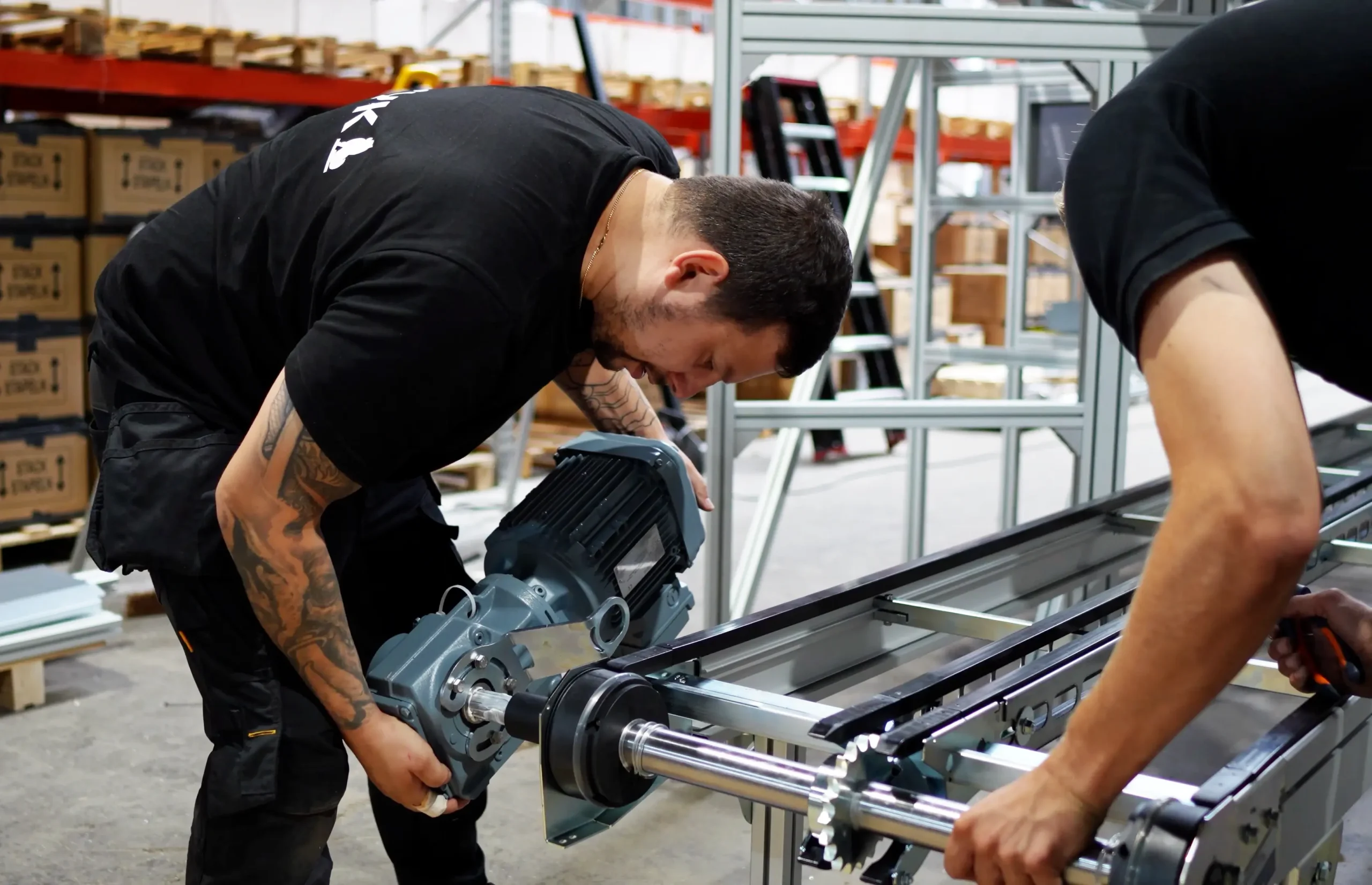
Changeover refers to the process of switching a production line from one SKU to another.
In manual or semi-manual environments, this may involve limited tooling changes and operator adjustments.
In automated lines, changeover typically requires:
-
Program loading and system validation
-
Fixture or tooling replacement
-
Sensor recalibration and test runs
-
Quality verification before release
Each step consumes time, labor, and production capacity, even if no defective parts are produced.
Why Automation Raises the Cost of Changeovers
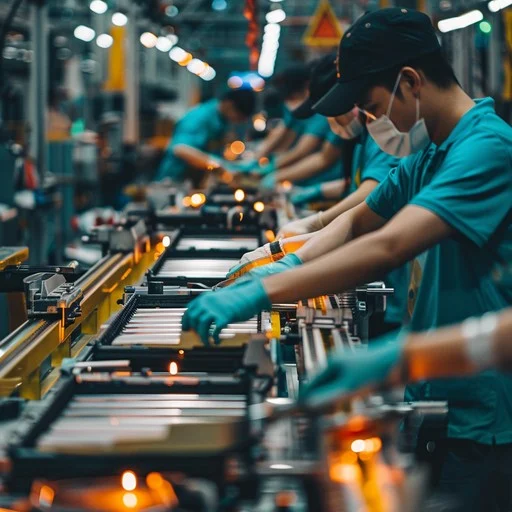
Automation improves output stability and repeatability.
At the same time, it increases the fixed cost of each production interruption.
Several factors drive this shift:
-
Tightly integrated systems
Automated lines rely on synchronized hardware, software, and quality checkpoints.
Any change disrupts the entire system, not just one workstation. -
Validation requirements
Modern production systems often require documented validation before restarting.
This process consumes engineering time that does not scale with order size. -
Opportunity cost of downtime
While a line is being reset, it produces nothing.
The lost output often exceeds the direct labor cost of the changeover itself.
As automation levels increase, changeover costs become more predictable—and harder to absorb.
How Changeover Costs Shape Order Acceptance
From an importer’s perspective, a small or mixed-SKU order may appear commercially reasonable.
From a factory’s perspective, the same order may be structurally inefficient.
As a result, changeover costs introduce structural pressure on production systems.
How this pressure is translated into order acceptance behavior depends on coordination mechanisms applied upstream, including SKU stability requirements and MOQ logic.
These behaviors are often interpreted as pricing pressure or supplier inflexibility.
In reality, they reflect internal cost structures created by automated production systems.
The Link Between Changeover Costs, SKU Stability, and MOQ Logic
Changeover cost does not operate in isolation.
It interacts directly with other automation-driven mechanisms.
-
Stable SKUs reduce the frequency of line resets
-
Higher MOQs spread fixed changeover costs across more units
-
Standardized order structures minimize production disruption
This explains why automated production lines favor stable SKUs over mixed orders
and why MOQ increasingly functions as a system coordination constraint rather than a pricing threshold.
These mechanisms have been examined separately in related analyses, but changeover economics connects them at the operational level.
Why Importers Rarely See These Costs
Changeover costs rarely appear on invoices or quotations.
They are embedded indirectly through:
-
MOQ requirements
-
Reduced willingness to negotiate small orders
-
Longer lead times for non-standard SKUs
Because these signals are indirect, importers often misinterpret them as negotiation tactics rather than structural constraints.
This misunderstanding increases friction between buyers and factories, especially during first-time or trial orders.
Structural Implications for Importers
Understanding changeover economics helps importers interpret sourcing constraints more accurately.
It clarifies why:
-
Factories resist frequent SKU switching
-
“Small test orders” are increasingly difficult to place
-
Consistency matters more than flexibility in automated environments
These effects are not temporary market conditions.
They are structural outcomes of how modern production systems operate.
For a broader overview of how automation is reshaping export order structures, see:
https://bilinkglobal.com/december-2025-review-how-manufacturing-automation-data-is-reshaping-auto-parts-export-order-structures/
Relationship to Other Mechanism Analyses
This analysis complements two related mechanism studies:
-
Why Automated Production Lines Favor Stable SKUs Over Mixed Orders
https://bilinkglobal.com/why-automated-production-lines-favor-stable-skus-over-mixed-orders/ -
How Automation Changes MOQ Logic in Auto Parts Manufacturing
https://bilinkglobal.com/how-automation-changes-moq-logic-in-auto-parts-manufacturing/
Together, these mechanisms explain why many sourcing behaviors that frustrate importers are not strategic choices, but system-level constraints.
Closing Observation
Automation does not eliminate cost.
It redistributes cost into places that are less visible to buyers.
Production line changeover is one of those hidden cost centers.
Importers who recognize its impact can align their order structures more effectively with modern manufacturing realities.
Those who do not may continue to negotiate against constraints that suppliers cannot remove.