Product Positioning
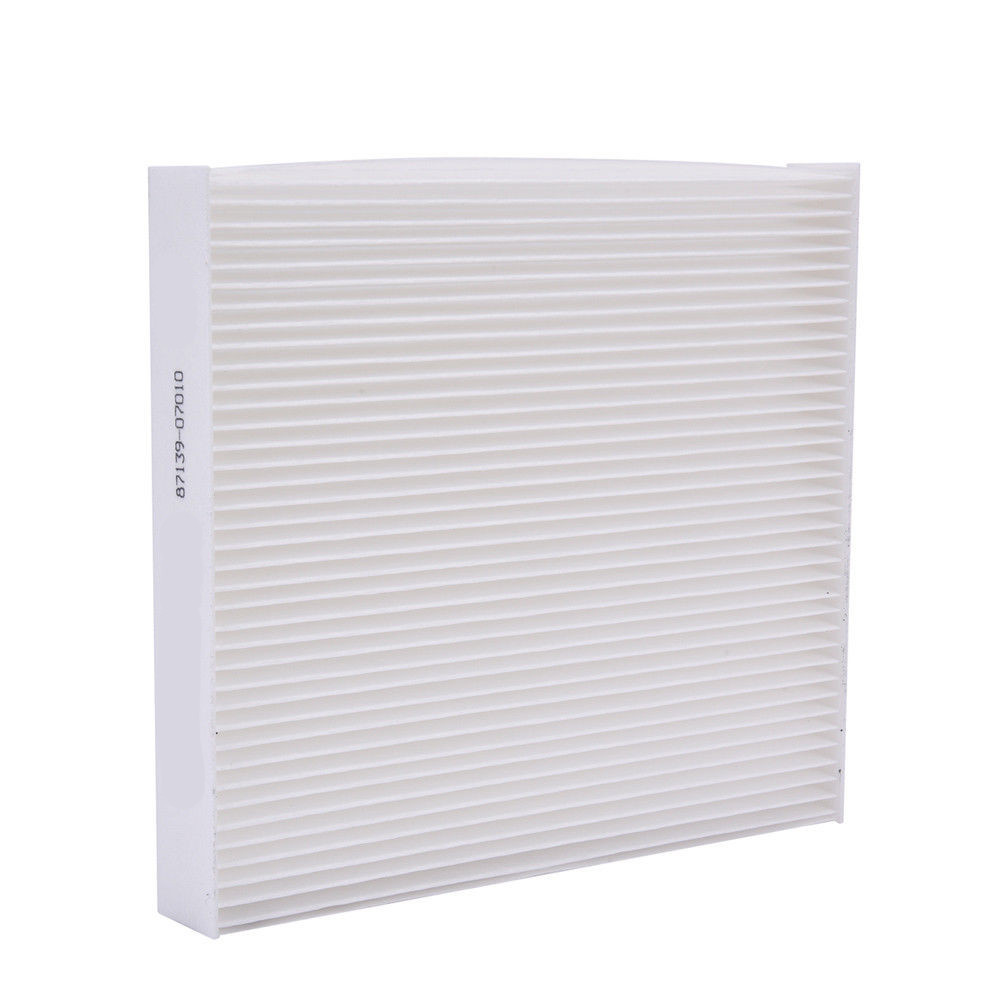
This cabin filter is used as a configuration-sensitive validation part for importers assessing application accuracy and model differentiation in the Kenya aftermarket. This OE-matched part is supplied for export buyers handling fitment-sensitive or mixed-SKU aftermarket orders.
Product Overview
This cabin filter is intended for Toyota Probox vehicles that are equipped with a factory cabin filter housing.
Its role is to filter incoming air used by the HVAC system, supporting basic interior air quality during normal operation.
In the Kenyan aftermarket, cabin filters are treated differently from engine maintenance parts.
Their application depends heavily on vehicle trim level and original equipment configuration rather than engine platform alone.
For this reason, Probox cabin filters are commonly used to evaluate application discipline rather than sales volume during supplier validation.
Application Context
In Kenya, Toyota Probox vehicles are widely imported as used JDM units and primarily deployed for commercial and utility-oriented use.
Many base-grade Probox configurations prioritize durability and cost efficiency over cabin comfort features.
As a result, some vehicles are delivered without a factory-installed cabin filter, while others retain a filter housing that allows installation.
Workshops typically verify housing presence before recommending or replacing a cabin filter.
This makes cabin filters a configuration-dependent PMS component in real Kenyan workshop operations.
Confirmed Application Scope
-
Vehicle Model: Toyota Probox
-
System: HVAC / Interior ventilation
-
Configuration Requirement: Factory cabin filter housing present
-
Market Context: Kenya / East Africa
Cabin filter applicability must be confirmed visually or by VIN, as engine type alone does not determine fitment.
OE Reference
Primary OE
This OE reference is commonly associated with Toyota compact commercial vehicles equipped with a cabin filter housing.
Compatible OE References
For validation purposes, maintaining a single primary OE helps reduce configuration-related confusion.
Production Range & Specification Stability
This cabin filter is produced under controlled specifications to maintain consistent external dimensions and fitment within the designated housing.
Production control emphasizes stable frame geometry and uniform filtration media placement to support repeat installation during routine service.
Quality Consistency & Batch Control
Batch-to-batch consistency is monitored to ensure stable fitment and airflow characteristics across multiple supply cycles.
This consistency supports importer evaluation when dealing with configuration-sensitive interior components.
Packaging & Labeling
Packaging is designed for mixed PMS shipments commonly used by Kenyan importers.
Clear OE reference labeling assists workshops in distinguishing cabin filters from engine air filtration components.
Consistent labeling helps reduce misapplication during early trial distribution.
Procurement Considerations for Importers
When evaluating this cabin filter, importers typically focus on:
-
Correct identification of applicable Probox configurations
-
Dimensional consistency for housing fitment
-
Clear OE reference to avoid confusion with engine air filters
-
Packaging clarity for warehouse and workshop handling
At this stage, application accuracy is prioritized over turnover speed.
Typical Validation & Expansion Path
This cabin filter is often evaluated after engine maintenance items when importers assess interior and HVAC-related PMS components for configuration accuracy.
Successful validation typically leads to broader evaluation of interior maintenance parts across similar Toyota utility models.
Application & Export Notes
-
OE reference verified before shipment
-
Suitable for export and bulk aftermarket orders
-
Fitment checked against listed vehicle models
Risk Awareness
Not all Toyota Probox vehicles are equipped with a factory cabin filter housing.
Supplying cabin filters without confirming housing presence can result in misapplication and early validation failure.
Clear configuration confirmation is essential before trial orders and repeat procurement.