

Procurement Signals #1: The Sales Echo vs. Warehouse Reality
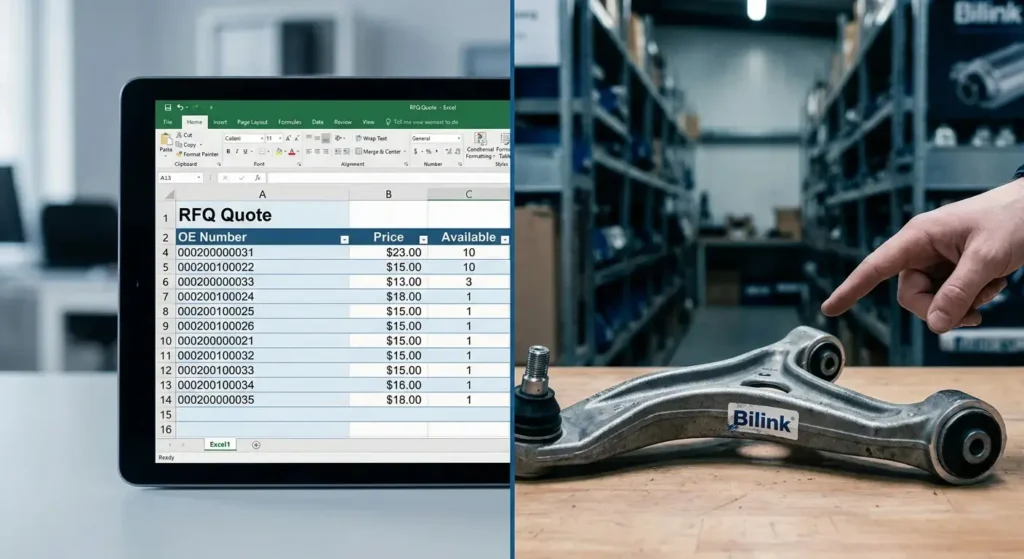
In cross-border auto parts trade, few moments get a buyer’s heart racing faster than sending an RFQ with dozens of OE numbers and receiving a complete quote back in under five minutes. For many buyers evaluating automotive parts suppliers, that feels like professionalism.
The file looks clean, and sharp prices make the quote look even stronger. On paper, everything is “available.” However, there are no questions, warnings, or remarks.
Very often, it is only a Sales Echo.
A Sales Echo is a fast answer from the sales side before the warehouse, technical, and packing sides have truly checked the order. The conversation moves quickly, so the buyer feels safe. But the order itself may still be floating on assumptions.
That is where many auto parts problems begin.

Many automotive parts suppliers look efficient at quotation stage, but only a smaller number can keep the same accuracy when the order reaches warehouse checking, mixed packing, and final shipment.
In this business, you are not buying a part name. You are buying fitment, version accuracy, stock truth, labeling clarity, and packing discipline. A quote can look complete and still be weak. It may carry the right OE family but the wrong market version. It may match the photo but miss the connector type. It may fit the description but fail at installation. It may look low-risk on the sheet and become expensive after loading, arrival, or workshop inspection.
That is why fast communication and accurate execution are not the same process. This is also why structured fitment and product data standards matter in the aftermarket, as Auto Care explains through ACES and PIES.
What Automotive Parts Suppliers Often Hide Behind Speed
The first danger in a fast quote is not the price.
It is the gap between the Sales Stage and the Execution Stage.
At the sales stage, speed helps win attention. At the execution stage, unchecked details become real cost. In auto parts trade, that gap is rarely small. This is also where many buyers working with auto parts wholesale suppliers misread the signal. They think speed proves control. In reality, speed often proves only that sales replied before execution checked.
1. How Automotive Parts Suppliers Miss Silent OE Version Differences
One OE number does not always mean one stable result.
For example, a radiator fan may look similar yet differ in blade angle, motor power, or mounting points between Middle East and European markets. A bumper bracket may come with or without sensor holes. A control arm may match the photo while the bushing layout or ball joint differs by model year.
This is why a buyer cannot rely on a fast match between name and part family. In real sourcing, an oe number for auto parts is only the starting point. It still needs version, market, and application confirmation.
A supplier who replies instantly without asking about market, year, trim, or version is rarely confirming fitment. He is usually just holding the inquiry.
2. Connector and Interface Mismatch
This is where many “correct” parts become unusable.
Is the sensor plug 3-pin or 4-pin?
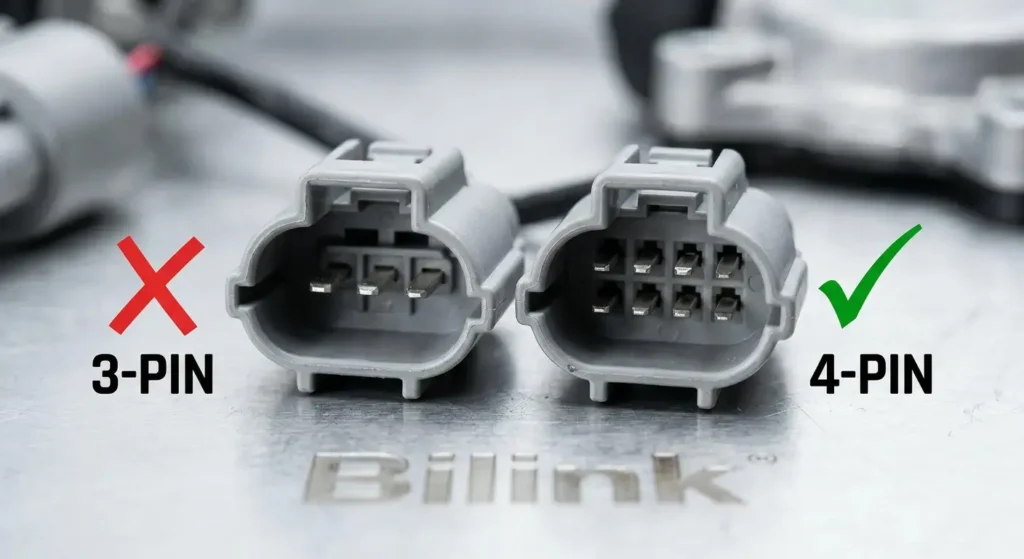
Is the mirror connector 5-wire or 7-wire?
Does the lamp use the same socket layout?
Does the pump match the port size and plug style?
Does the bracket come with sleeves, clips, or bare holes?
These are installation-critical details.
The same problem often appears when buyers send only an oe number car parts list and expect the quote to be enough. It is not enough. The part may share the code family yet still fail on connector count, interface style, or small hardware differences.
If nobody asks before quoting, however, the risk does not disappear. It simply moves to the buyer. The cost appears later as return freight, installation delay, customer complaints, or dead stock.
3. Virtual Inventory
“In stock” is one of the easiest answers to give and one of the most expensive to trust too early.
Sometimes the file is old, while in other cases the stock is already reserved. The quantity may exist, but not in the exact version quoted. At times, the carton is still there even though the inner batch has changed. In many weak systems, the item continues to show as available because nobody cleaned the records.
In practice, a quick “available” is not inventory truth.
Real inventory truth means someone has checked whether the goods can actually support this order, in this quantity, in this version, under this timeline.
That distinction matters even more in wholesale auto parts orders, where one weak line can affect the whole mixed shipment.
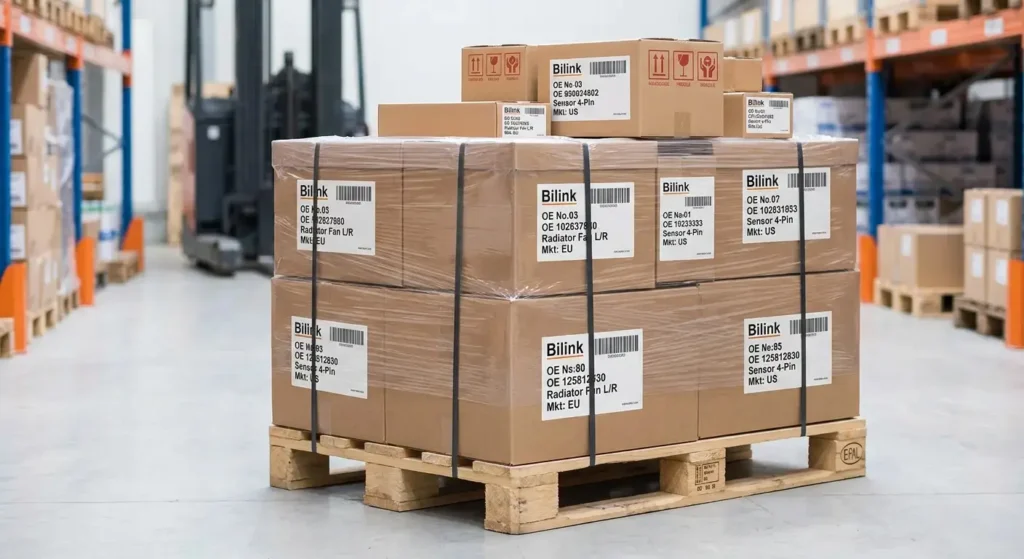
4. How Automotive Parts Suppliers Expose Packaging and Labeling Blind Spots
A mixed order is not just a quote sheet with many lines. It is a handling challenge.
Heavy parts can crush fragile ones. Lamps need edge protection. Mirror assemblies need controlled carton space. Mixed SKUs require clear inner labels. Customer codes, OE references, outer marks, and packing lists still need to match after consolidation.
If a quote says nothing about palletizing, reinforcement, carton separation, inner labels, or fragile-item control, then the supplier is not giving a full answer. He is only pricing the visible part of the order.
The invisible part will show up later as broken goods, mixed labels, customs friction, or arguments at destination.
Weak Signal vs. Strong Signal
Weak Signal: The Echo
Reply comes back almost immediately
“All available”
“No problem”
Lowest price, no remarks
No questions about year, market, side, connector, or version
No mention of labels, mixed packing, or fragile-item reinforcement
What it usually means:
Sales is moving faster than execution. The supplier is protecting quote speed, not order accuracy.
Strong Signal: The Reality
Reply is slightly slower
Supplier asks about model year, market, left/right, front/rear, connector type, or quality level
Supplier flags version risk or OE ambiguity
Supplier distinguishes ready stock from to-be-confirmed stock
Supplier mentions packing logic, label logic, or loading risk
What it usually means:
The quote has already started crossing from sales language into execution logic.
Why Good Automotive Parts Suppliers Create Early Friction
Many buyers misunderstand friction.
Many buyers treat a smooth quote as proof of a strong supplier, while others assume fewer questions mean better service. Some still believe the fastest reply is the safest reply.
In auto parts procurement, this is exactly how avoidable losses begin.
A better supplier often sounds a little more difficult at the start.
He may ask:
“Is this pre-facelift or post-facelift?”
“Left-hand drive or right-hand drive?”
“Do you need the version with sensor holes?”
“Is this plug 3-pin or 4-pin?”
“Do these lamps need separate reinforcement?”
“Should inner labels follow your OE codes or your own SKU codes?”
That is not delay for the sake of delay.
In auto parts trade, curiosity is not a personality trait. It is a control metric.
A supplier who asks the right questions is showing that he understands where the order can fail. He is checking the configuration before the risk reaches packing, shipping, customs, installation, and after-sales claims.
A good supplier should make you feel slightly bothered before order confirmation, not deeply damaged after arrival. The same pattern appears in our earlier analysis of why bigger suppliers do not always create more stable supply results in auto parts sourcing.
The slight friction at the quotation stage is often the cheapest quality control in the entire transaction.
Among automotive parts suppliers, the ones that slow down to confirm version, connector, stock, and packing details are usually the ones trying to protect the delivered result.
The Bilink Auto Parts View
At Bilink Auto Parts, we treat questions as a front-end risk filter.
When we ask about OE scope, side position, connector type, model year, market version, packaging method, label rule, or mixed-load separation, we are not adding friction for its own sake. Instead, we are checking whether the quote can survive contact with the real product, the warehouse floor, and the packing plan.
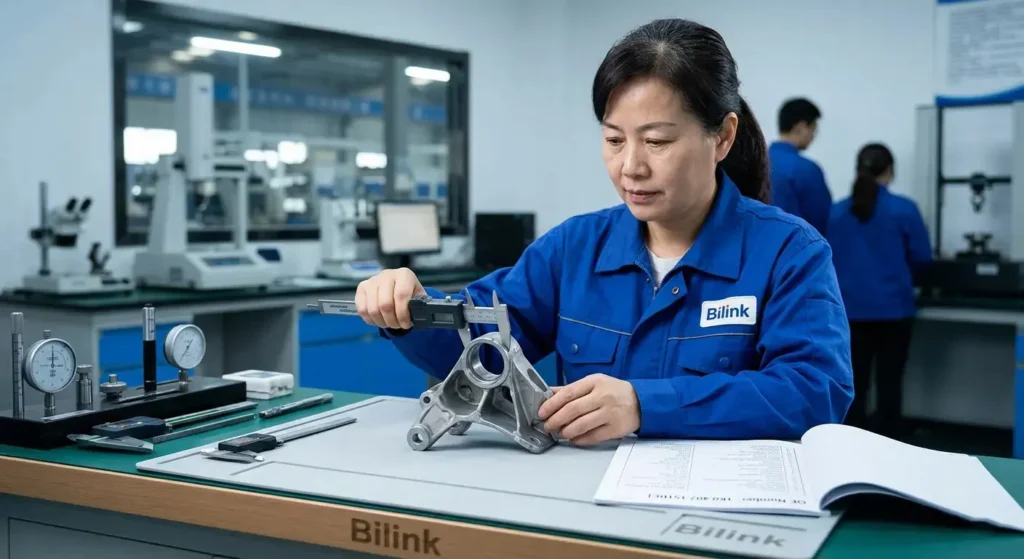
That is our procurement signal standard when we assess automotive parts suppliers and when buyers assess us.
Conclusion
Auto parts procurement is not about buying numbers.
It is about buying fitment, version control, stock truth, and execution discipline.
A fast reply is not a procurement signal by itself.
Many times, it is only a Sales Echo.
The real question is not:
Who replied first?
The real question is:
Who actually checked before replying?
That is the signal worth paying attention to.
More from the Procurement Signals Series
For the full Procurement Signals framework, read Procurement Signals: What Buyers Should Check Before They Import Auto Parts.
This article starts the Procurement Signals series. The next articles go deeper into technical questions, quote control, low-price risk, and VIN-based part confirmation.
Continue with Procurement Signals #2: Technical Curiosity Is Not Delay. It Is Control.
Then read Procurement Signals #3: Not Every Question Is Control. Some Are Just Theater.
You can also continue with Procurement Signals #4: Low Price Is Not Control. It Is Often Deferred Risk.
For configuration-sensitive parts, continue with Procurement Signals #5: Car Parts by VIN Still Need Photo Confirmation.